
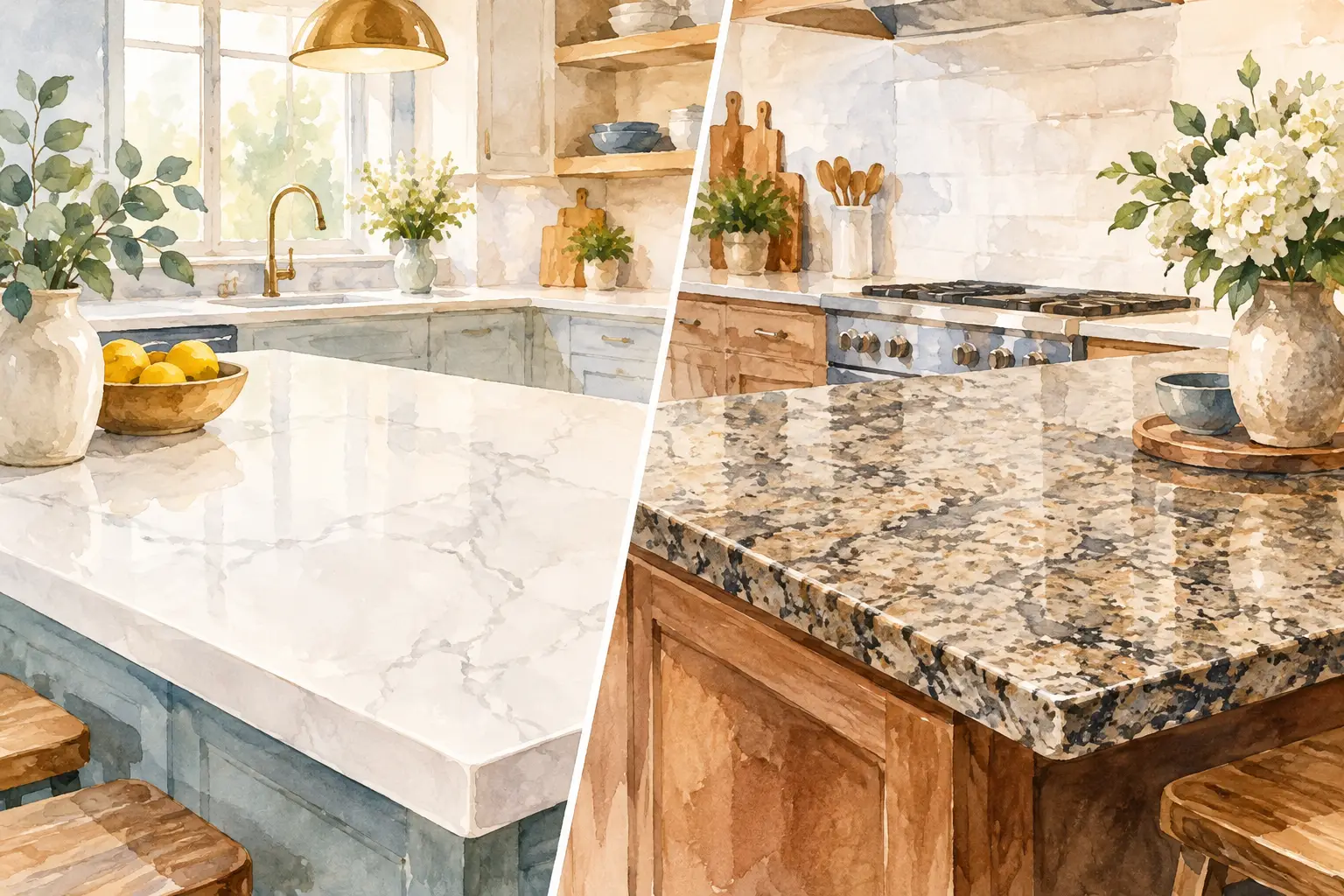
A countertop has to handle far more than it gets credit for. It becomes the landing place for grocery bags, homework, hot pans, coffee makers, holiday baking, and the everyday rush out the door. When homeowners compare quartz versus granite counters, the better choice is rarely about which material is universally better. It is about which one fits the way your household uses the kitchen.
Both are attractive, durable options for a kitchen renovation. Both can add value and give an older kitchen a finished, cohesive look. Their differences show up in maintenance, heat resistance, appearance, and the small day-to-day habits that can make one material feel easier to live with than the other.
Granite is a natural stone cut from the earth. Every slab has its own movement, mineral deposits, veining, and variation in color. Even slabs pulled from the same quarry can look noticeably different. That individuality is a major reason homeowners are drawn to granite.
Quartz countertops are engineered surfaces. They are typically made from ground natural quartz combined with resins and pigments, then manufactured into slabs. This process creates a more controlled appearance, with options ranging from clean, consistent solid colors to designs that resemble marble or natural stone.
Neither choice is automatically more upscale. A well-selected granite slab can make a kitchen feel warm and distinctive, while a quality quartz pattern can create a polished, tailored look. The right material depends on whether you prefer nature’s variation or a more predictable design.
For many busy households, maintenance is where quartz pulls ahead. Its nonporous surface does not generally require sealing, and routine cleaning is straightforward. A soft cloth, warm water, and mild soap are typically enough for daily upkeep. Because the surface is nonporous, it is less likely to absorb spills from coffee, oil, wine, or sauce.
Granite needs a little more attention. Most granite counters should be sealed periodically to help protect the stone from staining and moisture absorption. How often depends on the specific stone, the quality of the initial sealant, and how heavily the kitchen is used. Some homeowners reseal annually, while others can go longer.
That does not mean granite is difficult to own. With proper sealing and reasonable care, it performs very well for years. But if you want the lowest-maintenance option for a family kitchen, quartz is often the more forgiving choice.
Avoid harsh cleaners on either surface. Abrasive powders, strong acids, and aggressive degreasers can dull finishes or damage protective treatments. A remodel should make life easier, not add a complicated cleaning routine.
Granite has an advantage around high heat. Because it is natural stone, it generally handles a hot pan better than quartz. Even so, using trivets is a smart habit. Sudden temperature changes can create stress in any countertop material, and protecting the finish helps preserve its appearance over time.
Quartz is durable, but the resin binders in the surface can be affected by excessive heat. Setting a hot skillet or slow cooker insert directly on quartz can leave a mark, discolor the surface, or cause cracking in some situations. If your kitchen sees frequent stovetop-to-counter transfers, granite may offer more peace of mind.
Both materials resist everyday scratching well, but neither is indestructible. Granite is very hard, while quartz is also highly scratch resistant. Cutting directly on either surface is still not recommended. Knives can damage the finish over time, and using a cutting board protects both the countertop and your blades.
This decision often comes down to what you want to see every morning.
Granite brings natural movement and depth. Some slabs have dramatic veining, while others offer a more speckled, uniform appearance. Since each piece is unique, granite can become a focal point in a kitchen with simple cabinet colors and straightforward backsplash tile. It works especially well for homeowners who appreciate warmth, texture, and the character of real stone.
Quartz offers more consistency from sample to finished installation. That makes it easier to plan around cabinet paint, flooring, backsplash selections, and wall color. It is a strong fit for kitchens where the goal is a clean, cohesive appearance, especially with white or light-toned cabinetry. Quartz also provides many marble-inspired designs without the higher maintenance that natural marble can require.
The sample matters, but the full slab matters more. A small countertop chip cannot show the true scale of a vein, the concentration of color, or the direction of movement across an island. During the design process, it is worth considering how the material will look across the full kitchen, not just in a showroom sample.
Quartz and granite can overlap significantly in price. Basic selections may be relatively comparable, while premium colors, rare granite slabs, thick edges, large islands, waterfall panels, and detailed fabrication can increase the total for either option.
The countertop itself is only part of the project budget. Measurements, fabrication, delivery, installation, sink cutouts, backsplash height, edge profiles, seam placement, and removal of existing counters all affect the final investment. A kitchen with several corners or an oversized island may require more seams, more labor, or more material than a simple galley layout.
It is also wise to view countertops as part of the whole kitchen plan. A beautiful slab will not solve a cramped layout, inconvenient appliance placement, poor lighting, or limited storage. For homeowners investing in a larger renovation, coordinating counters with cabinet layout and workflow usually produces a better result than selecting surfaces in isolation.
Quartz is often the practical choice for homeowners who want a consistent look and minimal ongoing maintenance. It is especially appealing for active kitchens where spills happen, cleanup needs to be simple, and the design calls for soft whites, light marble-style veining, or a uniform color.
Granite is often the better fit for homeowners who value a natural, one-of-a-kind surface and want stronger heat tolerance. It can be an excellent choice for cooks who regularly use hot cookware and do not mind periodic sealing as part of caring for a natural material.
There are also style-specific reasons to choose each one. If a kitchen has rich wood cabinets, a granite slab with warm mineral tones may bring out the cabinetry beautifully. If the goal is to brighten a dated kitchen with painted cabinets and a fresh, streamlined palette, quartz can provide the crisp, controlled look many homeowners want.
For a Louisville-area kitchen remodel, it helps to think beyond the showroom display. Consider how much cooking happens at home, whether children use the island for schoolwork, how often you entertain, and how much upkeep you realistically want to manage. A counter that looks right but does not match your routines can become a source of frustration.
Even the best material needs careful planning and workmanship. Countertop installers need accurate cabinet measurements, level base cabinets, proper support for overhangs, and thoughtful seam placement. Large islands, peninsulas, and heavy overhangs may need additional support, particularly when seating is planned underneath.
Sink selection also affects the final look and maintenance. An undermount sink creates a clean transition from counter to sink and makes wiping crumbs easier. The cutout must be fabricated precisely, and the sink must be properly supported beneath the stone.
At 3C Remodeling and Construction, countertop choices are considered alongside the larger kitchen, including cabinet storage, layout, lighting, flooring, and the way the room functions for the people who use it. That fuller view helps avoid a common remodeling mistake: choosing individual finishes that look nice separately but do not work together in the finished space.
Not necessarily. Higher-quality quartz designs can look remarkably natural, particularly marble-inspired options with layered veining. Still, quartz usually has a more consistent pattern than granite. If you want unmistakable natural variation, granite is difficult to duplicate.
Yes, especially if its sealant has worn down or the stone is naturally more porous. Spills should be wiped up promptly, particularly oils, red wine, and deeply colored foods. Regular sealing greatly reduces the risk.
Both can be appealing to future buyers when they are well chosen and professionally installed. A countertop that fits the kitchen’s overall style, cabinet quality, and condition will generally matter more than picking one material solely for resale.
Minor chips can often be filled or polished by a qualified professional. Large cracks, heat damage, or damage around cutouts can be more complicated. Prevention, proper support, and careful use remain the best protection.
The best countertop is the one that supports your daily routine while making the kitchen feel like a place you want to spend time. Bring your cooking habits, design preferences, and long-term plans into the decision, and the right choice becomes much clearer.
Business Name: 3C Remodeling and Construction
Address: 1902 Campus Pl Suite 12, Louisville, KY 40299
Phone: 502-827-1361
Business Hours:
Mon - Fri: 08:00 AM to 05:00 PM
Sat-Sun: Closed
Referral program available