
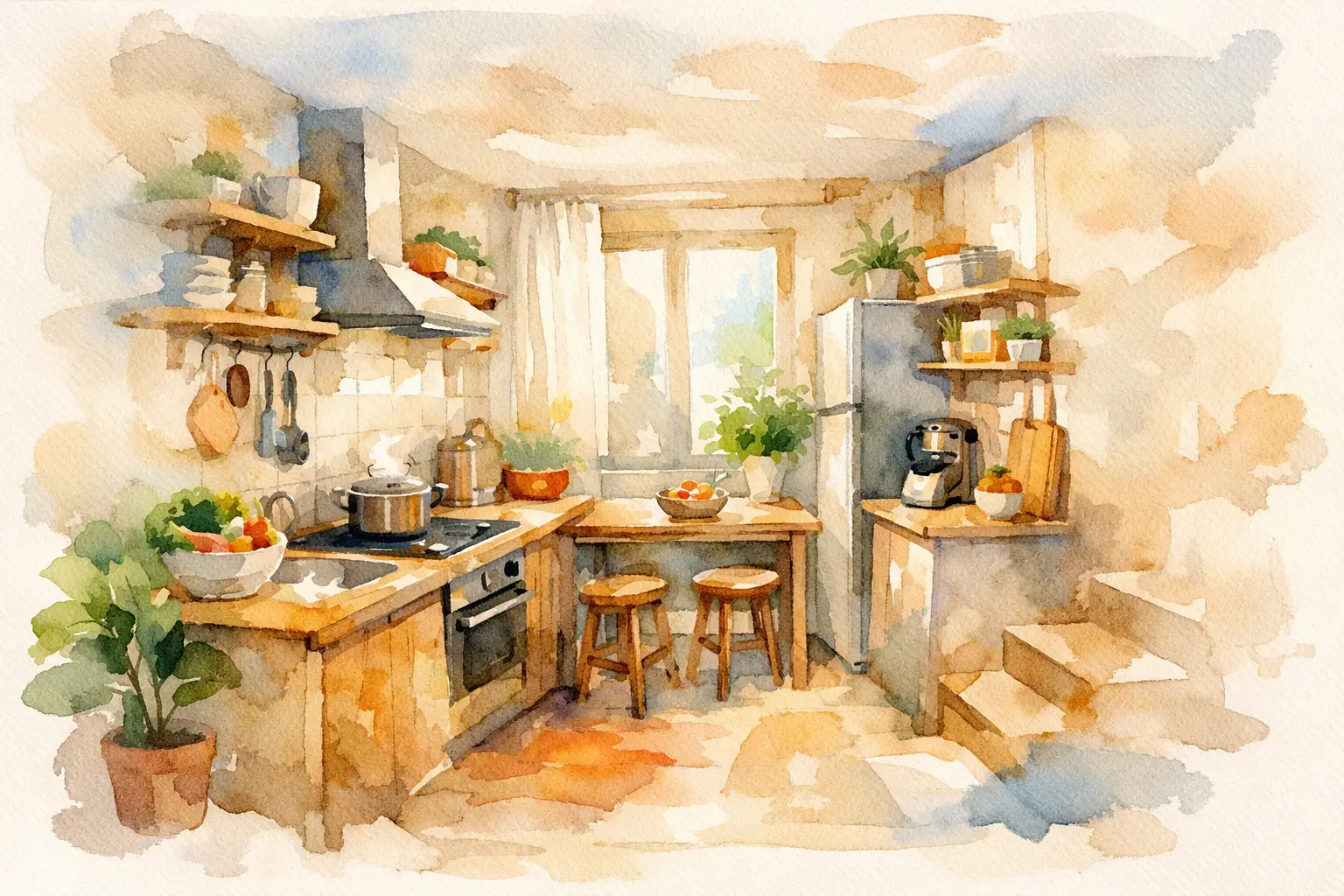
When your kitchen feels tight, every step gets noticed. The fridge door bumps an island stool, two people cannot pass each other comfortably, and storage ends up scattered wherever it fits. Finding the best kitchen layout for small space homes is not really about squeezing in more cabinets. It is about making the room work better for the way your household actually cooks, moves, and lives.
For most small kitchens, the right layout comes down to flow first, storage second, and style third. That order matters. A beautiful kitchen still feels frustrating if the dishwasher blocks a walkway or the range sits too close to a doorway. In homes across Louisville and nearby communities, we often see the same issue: the kitchen is not necessarily too small, but the layout is asking too much from too little space.
There is no single answer that fits every home, but one-wall, galley, and L-shaped kitchens usually perform best in smaller footprints. Each one can work well. The best choice depends on room width, traffic patterns, window placement, and whether the kitchen is closed off or open to another living area.
A one-wall kitchen places the sink, appliances, and storage along a single wall. This can be a smart option in condos, apartments, basement kitchenettes, and open-concept renovations where preserving floor space matters most. It keeps circulation simple and leaves room for a dining table or open walking path. The trade-off is limited counter space, so planning for tall pantry storage and efficient drawer organization becomes more important.
A galley kitchen uses two parallel runs of cabinetry. In many cases, this is the most efficient layout for a truly compact room because it keeps everything within easy reach. Prep, cooking, and cleanup can happen without wasted movement. The downside is that a galley can feel narrow if aisle widths are too tight or if both sides are overloaded with upper cabinets. Good lighting and thoughtful cabinet depth make a big difference here.
An L-shaped kitchen is often the best fit for small homes that need the kitchen to feel open rather than boxed in. By using two connected walls, this layout creates a natural work zone while freeing up the rest of the room. It is especially useful when the kitchen opens into a family room or breakfast area. The challenge is making corner storage functional instead of letting that space go to waste.
Homeowners sometimes assume they need an addition when what they really need is a better plan. A small kitchen with the right layout can feel calmer and more usable than a larger kitchen with poor spacing. That is because daily comfort comes from how the room handles real routines.
Think about where groceries land when you walk in, where lunch gets packed in the morning, and how dinner cleanup happens at the end of the day. If your refrigerator sits far from prep space or your trash pullout is nowhere near the sink, even simple tasks become more annoying than they should be. A remodel should reduce those friction points.
This is also where local, hands-on planning matters. Older homes in Louisville and Southern Indiana often come with quirks – structural walls, awkward windows, radiators, off-center plumbing, and room shapes that do not follow a standard template. The best kitchen layout for small space remodeling is usually the one that respects those realities while improving the way the space functions.
A one-wall layout works best when the room is part of a larger shared space or when the footprint is too shallow for multiple cabinet runs. It keeps the kitchen compact and visually clean. This can be a strong choice for homeowners who want a simple, modern look without crowding the room.
To make it successful, appliance placement matters. The sink should have some landing space on at least one side, and the refrigerator should not sit so far away that prep feels disconnected. Tall cabinets can help recover storage, but too many full-height units can make the room feel heavy. It depends on ceiling height and how much natural light the space gets.
If pure efficiency is the goal, a galley often wins. Everything is close, and there is less dead space than in many other layouts. For cooks who want a practical workspace, this arrangement can be excellent.
Still, not every galley should stay closed in. In some remodels, opening one wall or replacing upper cabinets with open sightlines can make the kitchen feel much larger without changing the basic footprint. If the aisle is narrow, appliance door swings and drawer clearances need careful planning. That is one of those details that looks small on paper but changes everyday comfort.
An L-shaped layout gives a small kitchen some breathing room. It works well when you want a bit more counter space and a more open feel. Many families prefer this arrangement because it allows one person to cook while another moves through the room without constant interruption.
The corner is the key decision point. A poorly planned corner cabinet wastes valuable space, while the right solution can hold cookware, small appliances, or pantry items neatly. In some homes, an L-shape also creates room for a modest peninsula, but only if the walkways stay comfortable.
Layout is the foundation, but a few design choices help the room perform even better. Storage should go upward, not just outward. Ceiling-height cabinetry, deeper drawers, and well-placed pantry storage often do more for a small kitchen than adding more cabinets at standard heights.
Counter space should be protected. That means avoiding unnecessary decorative breaks and giving your main prep zone enough uninterrupted surface. In many remodels, homeowners are surprised by how much better the kitchen works once clutter-prone areas are reduced and storage is assigned more intentionally.
Lighting also matters more than people expect. A small kitchen can feel cramped when shadows collect under cabinets or in corners. Brighter task lighting, under-cabinet lighting, and finishes that reflect light can make the room feel more open without changing the footprint.
Appliance scale is another factor. Full-size appliances are not always the problem, but oversized ones often are. A counter-depth refrigerator or a more thoughtfully sized island can improve flow immediately. This is where trade-offs come in. You may gain a better walkway by choosing a slightly smaller appliance package, and for many homeowners that is worth it.
The biggest mistake is forcing in features that the room cannot support. An island is the most common example. Many homeowners ask for one because it looks appealing in photos, but in a truly small kitchen, an island can create more problems than benefits. If it tightens the path between the sink, range, and refrigerator, it is probably not the right move.
Another mistake is focusing only on cabinet count. More cabinetry sounds useful, but not if it makes the room feel crowded or blocks natural light. Smart storage beats excess storage. Deep drawers, pantry pullouts, and custom inserts usually outperform a wall of hard-to-reach cabinets.
It is also easy to underestimate traffic flow. Kitchens are rarely used by one person in isolation. People are passing through, grabbing drinks, unloading groceries, helping with homework, or talking while meals are being made. A layout should support that daily life, not fight against it.
Sometimes paint, refacing, and new countertops are enough to freshen a dated kitchen. But if the room is difficult to use, layout improvements are often the real value of a remodel. Moving a doorway, reworking cabinet placement, or opening part of a wall can change the entire experience of the space.
That is where a full-service remodeling approach helps. Instead of selecting finishes first, it starts with the way your kitchen needs to function. For a family-owned company like 3C Remodeling and Construction, that means listening to how homeowners use the room every day and building a plan around those habits, not around a one-size-fits-all design.
A small kitchen does not have to feel like a compromise. With the right layout, it can feel efficient, comfortable, and easier to live in every single day. If your current kitchen feels crowded, chances are the problem is not just the size of the room. It is the way the space is working – and that can be changed.
Business Name: 3C Remodeling and Construction
Address: 1902 Campus Pl Suite 12, Louisville, KY 40299
Phone: 502-827-1361
Business Hours:
Mon - Fri: 08:00 AM to 05:00 PM
Sat-Sun: Closed
Referral program available