
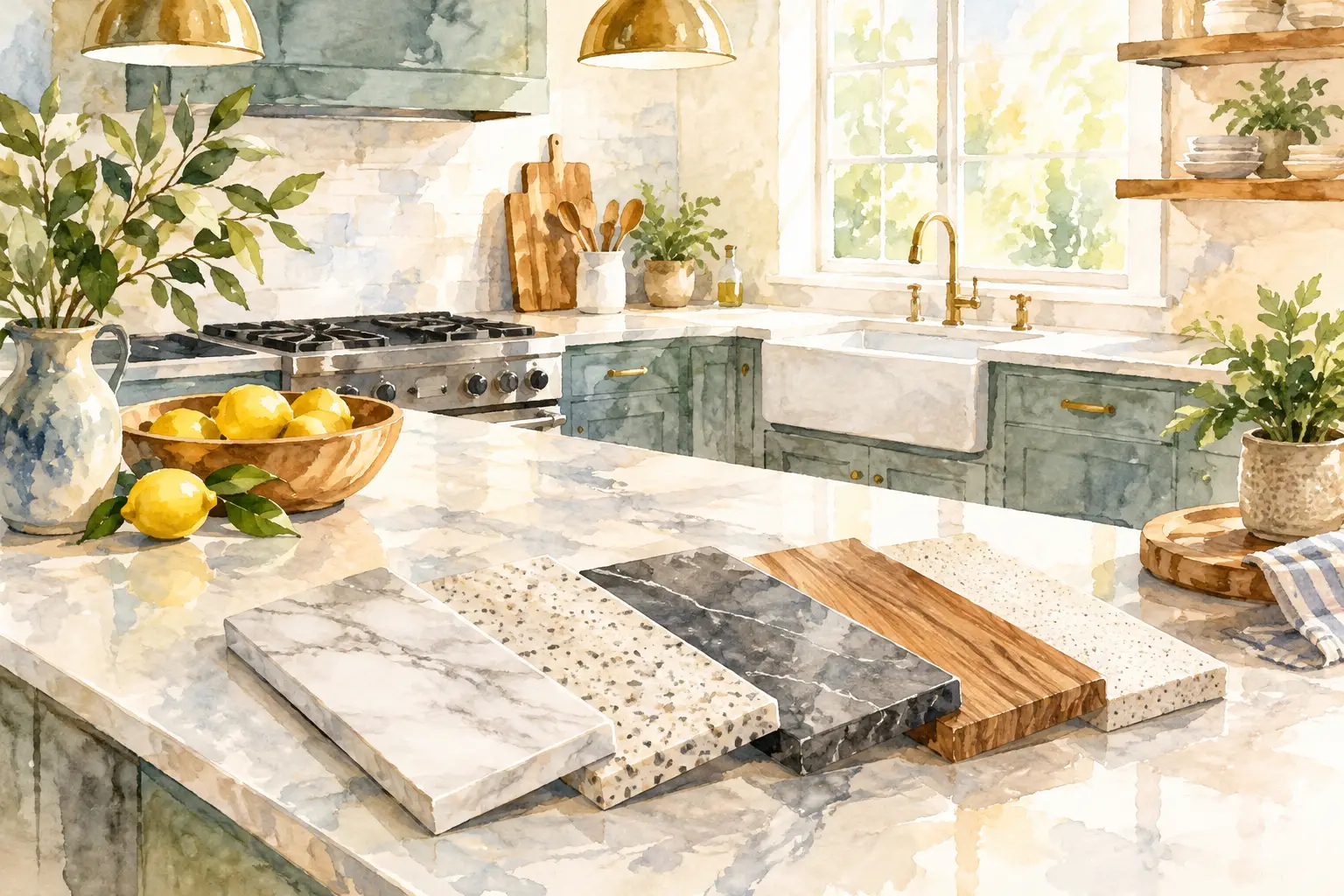
A countertop may look like one decision on a kitchen remodeling checklist, but it affects nearly every part of daily life. Kitchen countertop selection should account for more than a sample under showroom lighting. It should reflect how you cook, who uses the kitchen, how much maintenance feels realistic, and how the surface needs to work with your cabinets, layout, and budget.
For a busy household, the right countertop is one you can use confidently. For a homeowner planning to sell in a few years, it may be a finish that gives the kitchen a clean, current appearance without stretching the project budget. There is no single best material for every home, which is why thoughtful planning before installation matters.
Before comparing colors or edge profiles, consider the routines that happen at your counters. A household that prepares dinner most nights, packs lunches, hosts family holidays, and helps children with homework needs something different from a kitchen used mainly for light meals and entertaining.
Think about heat, spills, sharp utensils, cleaning habits, and how much activity happens around the sink and cooktop. If you tend to set down hot pans without thinking, heat resistance deserves a higher priority. If red wine, coffee, cooking oil, and craft projects are common at your island, stain resistance may matter more. Homeowners who want a low-fuss kitchen should be honest about maintenance rather than choosing a surface they will worry about using.
Your countertop also needs to support the layout. A large island can become the center of meal prep, serving, and conversation, so its material should be both durable and visually suited to a broad expanse. In a smaller kitchen, a lighter countertop may help the room feel more open, while a busy pattern can make an already compact space feel crowded.
The best material is usually the one that balances appearance, performance, and upkeep for your household. Every option has strengths, along with limitations worth discussing before work begins.
Quartz remains a popular choice for remodeled kitchens because it is nonporous, easy to clean, and available in a wide range of colors and patterns. It does not require periodic sealing, which appeals to homeowners who want a polished finish without a demanding care routine.
Quartz is an especially practical fit for active kitchens, but it is not indestructible. Direct, extreme heat can damage the surface, so trivets remain a good habit. Pricing can also be higher than some other materials, particularly for premium designs with dramatic veining. Still, many homeowners find that its everyday durability and simple care justify the investment.
Granite brings one-of-a-kind movement and color variation that manufactured materials cannot duplicate. It is durable, handles heat well, and can add a substantial, timeless feel to a kitchen. No two slabs are exactly alike, which is part of its appeal.
That natural variation also means a small sample cannot tell the whole story. Viewing the actual slab helps ensure the pattern and color work with your cabinet finish, flooring, and backsplash. Granite generally needs sealing to help resist staining, and the frequency depends on the specific stone and product used. For homeowners comfortable with periodic care, granite remains a strong choice.
Marble has a classic look that many homeowners love, especially in traditional or high-end kitchen designs. Its soft veining can make an island or baking area feel special. It is also naturally cool, which can be appealing for baking.
However, marble is softer and more porous than quartz or granite. It can etch when exposed to acidic foods and develop marks over time. Some homeowners appreciate that lived-in patina, while others find it frustrating. Marble works best when its character is part of the plan, not an unexpected maintenance issue after installation.
Not every remodel requires natural stone or quartz. Solid-surface countertops create a smooth, nonporous look with inconspicuous seams and can often be repaired if scratched. Laminate has come a long way in appearance and can be a cost-conscious choice for a refresh, secondary kitchen, laundry space, or rental property. It is more vulnerable to cuts and heat, so it requires care around hot cookware.
Butcher block adds warmth and can make an island feel less formal, especially when paired with painted or stained cabinets. It does require regular maintenance and protection from standing water. For some kitchens, butcher block works beautifully as an accent surface rather than throughout the room.
Countertops should not be selected in isolation. Cabinet color, backsplash tile, flooring, wall paint, hardware, and lighting all influence how a surface reads once the kitchen is complete. A countertop that looks perfect alone may compete with a heavily patterned backsplash or make warm-toned cabinets look cooler than expected.
A helpful approach is to choose the largest visual elements first. Cabinet style and color often establish the direction, while the countertop connects those cabinets to the backsplash and flooring. If the countertop has dramatic veining or movement, a simpler backsplash often creates better balance. If you prefer a quiet, solid countertop, tile can bring texture or color to the wall.
Samples are useful, but they should be viewed together and in the home whenever possible. Natural light can change throughout the day, and Louisville-area homes often have kitchens with very different exposure and lighting conditions. Place samples near windows, under existing fixtures, and alongside cabinet and flooring selections before making a final call.
The details around a countertop have a major impact on both function and cost. A simple eased edge has a clean, versatile appearance and is often easier on the budget than more decorative profiles. A thicker-looking edge can create a more substantial style, but it may involve additional material or fabrication.
If your island includes seating, the overhang needs proper support based on the material and depth. This is not simply a design preference. Adequate support helps prevent stress and damage over time, especially in a home where people lean on the island or children pull up stools every day.
Seams should also be considered during the planning stage. Large slabs may require seams depending on the countertop material, kitchen dimensions, and access into the home. An experienced remodeling team can help place seams where they are less noticeable and make sure the layout supports a clean final appearance.
The sink choice matters, too. An undermount sink creates a smooth transition for wiping crumbs and water directly into the basin, but it requires a countertop material and installation method suited to that application. A farmhouse sink can become a focal point, though cabinet modifications may be needed. Planning these decisions together avoids last-minute compromises.
Material price is only one part of the countertop investment. Your budget should also account for measuring, fabrication, delivery, installation, sink cutouts, edge details, tear-out of old countertops, plumbing reconnection, and any needed cabinet or wall adjustments. A lower per-square-foot price can become less of a bargain if the project requires substantial add-ons.
It helps to decide where you want to invest. Some homeowners prioritize a durable quartz island while choosing a more economical material for a less-visible perimeter section. Others prefer to put more of the budget toward cabinetry, storage improvements, or layout changes that solve daily frustrations. A countertop should enhance the kitchen, but it should not consume funds needed for the features that make the room work better.
Countertop materials, slab availability, fabrication schedules, and installation timing can all affect a remodeling timeline. Making selections early gives your contractor time to coordinate measurements and avoid unnecessary delays. It also gives you room to compare options without feeling pressured by a deadline.
At 3C Remodeling and Construction, we help homeowners look beyond the display sample and consider how each choice will perform in the finished kitchen. The goal is not to steer every homeowner toward the same material. It is to create a kitchen that feels comfortable, functional, and worth the investment for years to come.
A good countertop should make daily routines easier, not make you hesitant to use your own kitchen. Choose the surface that fits your habits, your home, and the kind of life you want the room to support.
Business Name: 3C Remodeling and Construction
Address: 1902 Campus Pl Suite 12, Louisville, KY 40299
Phone: 502-827-1361
Business Hours:
Mon - Fri: 08:00 AM to 05:00 PM
Sat-Sun: Closed
Referral program available