
A whole-home remodel can look disjointed even when every individual room is beautiful. The issue is usually not the cabinet color or the tile itself. It is that selections were made room by room, without a clear plan for how the home should feel and function as a whole. Learning how to choose whole home finishes helps you avoid that expensive frustration and create spaces that work together for everyday life.
The goal is not to make every room identical. It is to create a home with a consistent point of view – one that fits your family, your budget, and the way you use each space.
Finishes should support how your household actually operates. Before comparing flooring samples or countertop colors, consider the routines that put the most wear on your home. A busy entry with kids, pets, and muddy shoes needs a different flooring choice than a formal sitting room. A bathroom used by teenagers needs easy-clean surfaces and practical storage. A kitchen where everyone gathers may need durable counters, comfortable lighting, and finishes that hide the occasional spill.
This is also the time to think about the layout. New flooring may carry through several rooms, but it should work with transitions, door clearances, existing stairs, and the rooms you plan to update later. A finish that looks great in isolation can become a poor choice if it makes future improvements harder or forces a compromise in function.
A good remodeling plan begins with the questions homeowners sometimes overlook: Where does clutter collect? Which rooms feel too dark? What needs constant cleaning? Where do people tend to gather? The answers guide better decisions than a trending image ever could.
Choosing finishes becomes easier when you establish a few anchors early. These are the elements that set the visual direction for the rest of the home, such as flooring, cabinet style, interior doors, trim color, and countertop material. They do not all need to match, but they should relate.
For example, if you choose warm-toned wood floors, cool gray tile and stark white cabinetry can still work, but the contrast needs to be intentional. You may bring the look together with a soft white paint, brushed nickel hardware, or a natural stone detail that includes both warm and cool tones. Without that connecting element, the rooms can feel like they came from different houses.
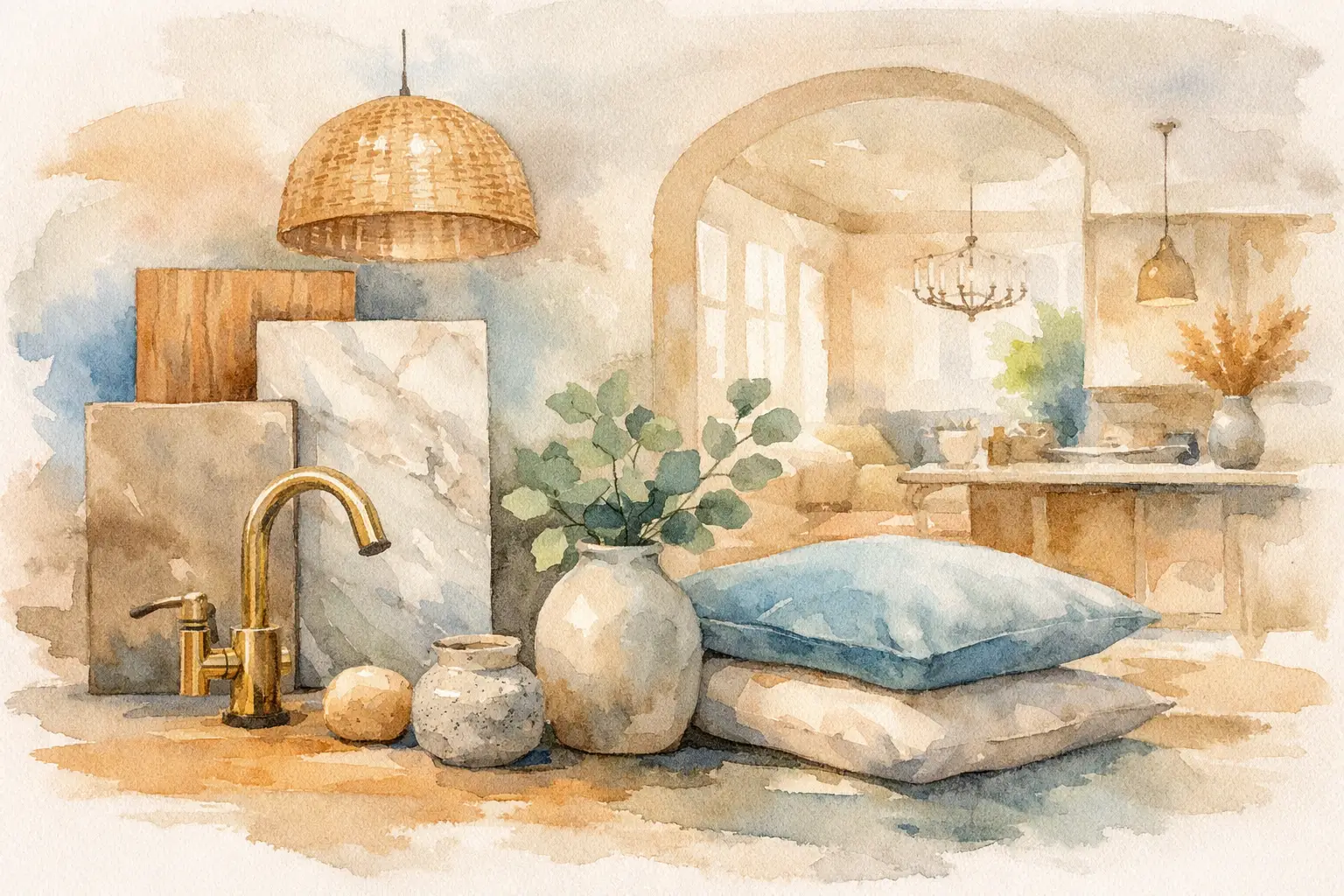
It helps to create a simple finish board with physical samples. Put your flooring, paint, cabinet door, countertop, tile, and hardware samples next to one another. Look at them in daylight, evening light, and under the lighting already in your home. Screens can make colors appear more uniform than they really are, while physical samples reveal undertones and texture.
A whole-home palette usually works best when it includes a primary finish, one or two supporting finishes, and a few accent materials. For many homes, the primary finish may be the main flooring. Supporting finishes could include cabinet color, wall paint, and trim. Accent materials might be a tiled shower wall, a kitchen backsplash, black hardware, or a wood vanity.
This approach gives you room to make each space feel personal without introducing a new style in every room. A powder room can have a bolder wallpaper or patterned tile, for instance, as long as it still connects to the larger palette through color, metal finish, or wood tone.
Flooring has one of the biggest visual impacts on a whole-home renovation because it covers so much square footage. Extending one flooring material through connected living areas can make the home feel larger, calmer, and more intentional. It also reduces awkward transitions between rooms.
That said, one material is not always right everywhere. Bathrooms, laundry rooms, and certain lower-level spaces often benefit from tile or another water-resistant choice. The key is to select a complementary material rather than one that competes. Consider the scale, undertone, sheen, and texture of both materials when planning transitions.
Durability matters as much as appearance. Hardwood offers warmth and can be refinished, but it may show scratches and require more care in active households. Luxury vinyl can be a practical choice for families who want water resistance and easier maintenance. Tile is highly durable, though it can feel cooler underfoot and may add cost depending on the installation requirements. There is no universal best option – the right choice depends on your rooms, budget, and tolerance for maintenance.
Some finishes are expensive or disruptive to change later. Flooring, cabinets, countertops, shower tile, and plumbing fixtures generally belong in the long-term category. For these selections, favor materials and colors you will still appreciate after the newest design trend has passed.
That does not mean every permanent finish needs to be beige or plain. It means you should use bold choices thoughtfully. A rich blue vanity in a small bathroom may be easy to love and a manageable future update. A dramatic patterned tile across every floor of the home is a much bigger commitment.
Paint, light fixtures, cabinet hardware, mirrors, and decor are easier to replace. These are smart places to bring in a stronger trend, a darker color, or a personal statement. This balance keeps your renovation distinctive without making the home feel dated too quickly.
Matching every metal finish exactly is not necessary. In fact, mixing metals can make a home feel more collected and less like a showroom. The important part is repetition and balance.
If you use matte black hardware in the kitchen, consider repeating it in nearby lighting or door hardware. If your bathroom faucet is brushed nickel, that finish can appear again in a mirror frame or sconce. You can also mix finishes within one room, but give each one a purpose. A warm brass light fixture might complement black cabinet pulls, while chrome fixtures introduce a third unrelated look that could make the room feel busy.
Lighting deserves extra attention because it changes how every other finish appears. Warm bulbs can soften cool colors. Bright white bulbs can make some finishes look harsher. Before finalizing paint, tile, or countertop selections, review samples in the actual lighting conditions planned for the room.
Kitchens, living areas, hallways, and primary bathrooms often have the strongest influence on a home’s overall look. Start with the spaces that connect most directly to one another, then use those choices to guide secondary bedrooms, guest bathrooms, and less visible areas.
This does not mean every bathroom needs the same vanity or tile. It means a guest bathroom should look like it belongs in the same home as the kitchen and main living space. Repeating a paint family, metal finish, wood tone, or simple tile shape can create that connection without making each room feel copied.
For homeowners remodeling in phases, document every finalized selection. Keep product names, colors, finish samples, and photos in one place. When you return to the project next year, you will have a clear record of the foundation you already established.
It is easy to overspend on the most visible finish and then cut corners on the pieces that affect daily comfort. Before committing to premium tile or a specialty countertop, make sure the budget accounts for proper installation, lighting, storage improvements, ventilation, and the prep work behind the walls.
A beautiful shower tile installation will not solve poor drainage or inadequate waterproofing. New cabinets will not improve a cramped kitchen if the layout still leaves no room to work. Quality finishes matter, but their value depends on the craftsmanship and planning that support them.
At 3C Remodeling and Construction, we help homeowners think through these choices as part of the full project, not as a collection of disconnected purchases. That guidance can prevent late changes, mismatched materials, and avoidable stress once work is underway.
When considering how to choose whole home finishes, give yourself time to compare real samples and make decisions in the right order. Start with the elements that are hardest to change, confirm how they work together, and then layer in the details that make each room feel like yours.
The best finish plan is not the one that follows every trend. It is the one that makes your Louisville-area home easier to live in, more comfortable to enjoy, and ready to serve your family for years to come.
Business Name: 3C Remodeling and Construction
Address: 2185 Watterson Trail, Louisville, KY 40299
Phone: 502-827-1361
Business Hours:
Mon - Fri: 08:00 AM to 05:00 PM
Sat-Sun: Closed
Referral program available