
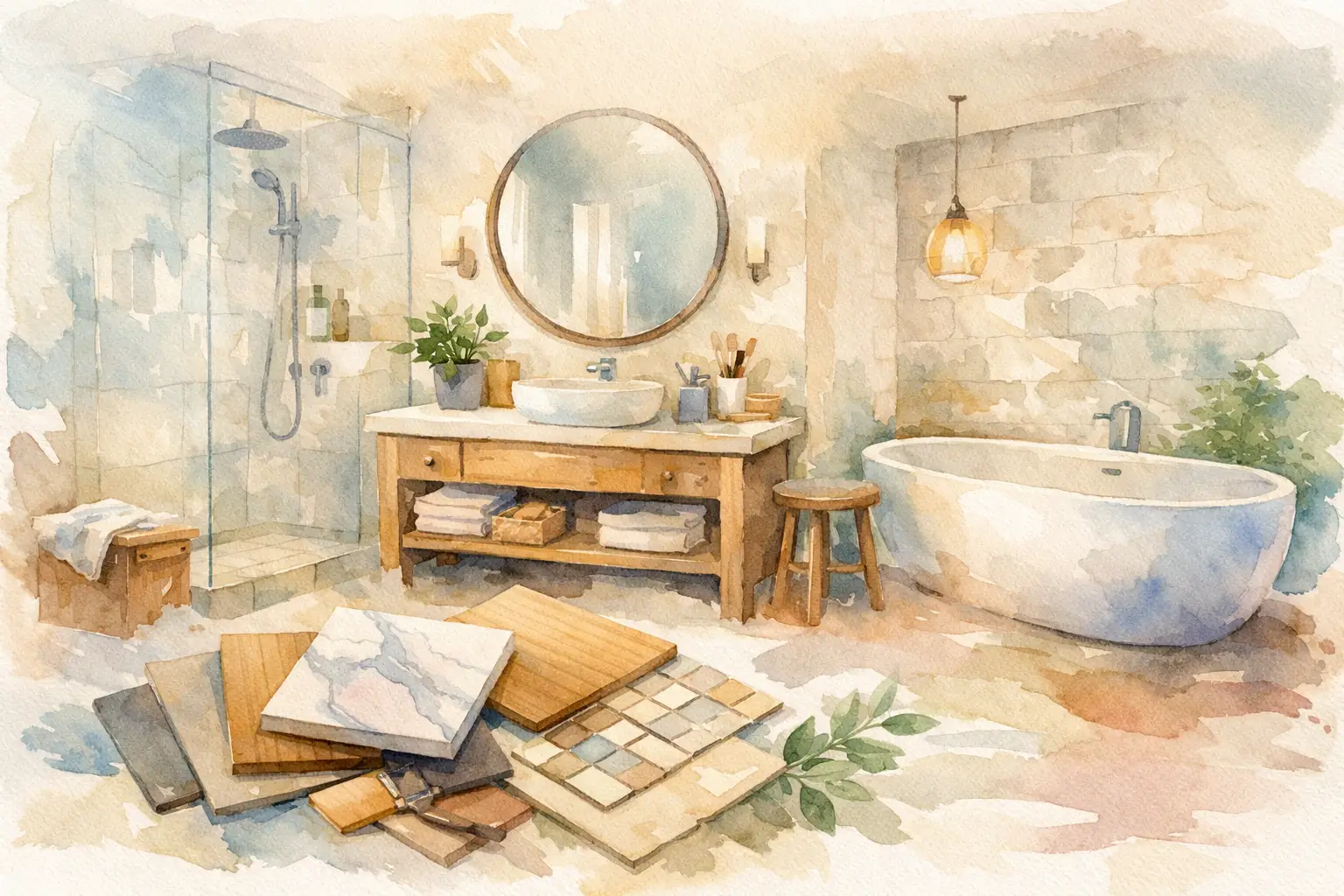
A beautiful bathroom that is difficult to clean, too dark to use, or short on storage will feel outdated far sooner than one with practical materials chosen for real life. This bathroom remodel material guide is designed to help homeowners make confident choices that hold up to busy mornings, steamy showers, children, guests, and the everyday wear that comes with a well-used home.
The best material is rarely the most expensive option in the showroom. It is the one that fits the room, your maintenance preferences, your budget, and the way your household uses the space. A hall bathroom shared by children needs different priorities than a primary bath meant to feel calm and spa-like.
Before choosing a tile color or faucet finish, think through the bathroom’s daily demands. Who uses it? Does the room get plenty of natural light? Is it a compact bath where every inch matters, or a larger primary bathroom with room for a separate shower and vanity? These answers help narrow the choices before the design process becomes overwhelming.
For example, a light-colored grout may look crisp in a guest bath that sees limited use. In a high-traffic family bathroom, a medium-tone grout may be the more practical choice because it hides everyday discoloration better. A glossy wall tile can brighten a shower, while a matte floor tile with texture offers better footing under wet feet.
Good remodeling decisions balance appearance with upkeep. Materials should support your routine, not create another chore.
Bathroom flooring needs to stand up to water, humidity, dropped toiletries, and frequent cleaning. It also needs to feel comfortable and safe. While there are several good choices, porcelain tile remains a dependable option for many full bathroom remodels.
Porcelain tile is dense, highly water-resistant, and available in a wide range of styles. It can resemble natural stone, wood, concrete, or classic patterned tile without demanding the same level of maintenance. It is especially well suited to shower floors, bathroom floors, and spaces where long-term durability is a priority.
Ceramic tile can also work well, particularly on walls and in lighter-use bathrooms. It is often more budget-friendly than porcelain, though porcelain is generally the stronger choice for floors and wet areas. For either option, look beyond the tile itself. The grout color, tile size, layout, and finish all affect how the finished room feels.
Large-format tiles can make a bathroom feel more open because there are fewer grout lines. Smaller mosaic tiles are often useful on shower floors, where additional grout lines can provide more traction. The right choice depends on the application, not just the look.
Luxury vinyl plank or tile is another practical choice when comfort underfoot and budget are key concerns. Quality vinyl flooring is water-resistant, easier on the feet than tile, and available in convincing wood and stone looks. It can be a smart fit for powder rooms, guest baths, and bathroom updates where a warmer feel is desired.
The main consideration is installation quality and product selection. Bathrooms need properly prepared subfloors and carefully finished edges so moisture cannot work its way beneath the material. Vinyl may not offer the same long-term appeal as porcelain in every high-end renovation, but it can be an excellent value in the right project.
The shower is where material choices have the biggest effect on maintenance. Tile showers are popular because they can be tailored to the room, from a simple subway tile surround to a fully tiled walk-in shower with a niche, bench, and accent wall. They also offer flexibility when improving an awkward layout.
Porcelain or ceramic wall tile is a reliable choice for shower surrounds. Larger tiles can reduce grout lines and simplify cleaning, while smaller tiles can add character in a niche or on an accent wall. Natural stone creates a distinctive look, but it generally requires more care, including sealing and cleaning products suited to the stone.
For homeowners who want fewer grout lines, solid-surface shower walls can be worth considering. These panels create a clean, streamlined appearance and can be easier to maintain than a fully tiled shower. They may offer fewer design options than tile, but they are a strong choice for homeowners who value simple upkeep.
No matter which surface you choose, waterproofing behind the finished material matters just as much as the visible finish. A shower should be built as a complete water-management system, not simply covered with attractive tile.
Bathroom countertops face a different type of wear than kitchen counters. They deal with cosmetics, soap, water spots, hair tools, and frequent wiping, but usually not heavy cooking or food preparation. That gives homeowners more flexibility, although durability still matters.
Quartz is a popular countertop material because it is nonporous, consistent in color, and easy to clean. It works well for homeowners who want the appearance of stone without regular sealing. Quartz is available in subtle whites, warm neutrals, marble-inspired patterns, and deeper colors that can ground a light bathroom design.
Granite and marble can bring natural variation that some homeowners love. Granite is durable but should be sealed as recommended. Marble has a timeless appearance, yet it can etch or stain more easily and requires a homeowner comfortable with a lived-in patina. If you prefer a finish that stays uniform with little attention, quartz may be the better fit.
The countertop and sink should be chosen together. An undermount sink creates a clean edge that is easy to wipe down, while a vessel sink makes more of a visual statement but can require extra attention around its base. In smaller bathrooms, the vanity depth and available counter space may matter more than choosing a dramatic slab.
A vanity has to do more than look good. It needs to provide storage, withstand humidity, and fit the available space without crowding the bathroom. Stock, semi-custom, and custom cabinetry can all have a place in a remodel depending on the layout and goals.
For cabinet construction, plywood boxes generally offer better moisture resistance and strength than lower-grade particleboard. Painted finishes can create a bright, classic look, while stained wood adds warmth and texture. In Louisville-area homes with older, smaller bathrooms, a well-planned vanity can also be an opportunity to gain usable storage through drawers, linen cabinetry, or a recessed medicine cabinet.
Drawers are often more functional than deep lower cabinets because they make everyday items easier to reach. Consider where towels, cleaning supplies, styling tools, and extra toiletries will go before finalizing the vanity design. Storage is one of the most valuable upgrades in a bathroom because it improves how the room works every day.
Faucets, shower valves, cabinet hardware, lighting, and towel bars are the finishing details homeowners touch constantly. It is tempting to make decisions based only on appearance, but durability and replacement availability deserve attention too.
Chrome remains a practical, timeless finish that is easy to coordinate and maintain. Brushed nickel is forgiving with fingerprints and water spots. Matte black offers a strong, current contrast, though it can show mineral buildup depending on your water and cleaning habits. Warm brass finishes can add character, especially in traditional or transitional homes, but choose a quality finish that will wear well.
Consistency helps a bathroom feel intentional. The faucet, shower trim, cabinet pulls, mirrors, and lighting do not have to match perfectly, but they should work together. A mix of finishes can look layered and personal when planned carefully. Without a plan, it can make a newly remodeled room feel pieced together.
Some of the smallest material choices make the greatest difference in how a bathroom performs. Grout should complement the tile while fitting your willingness to clean it. A contrasting grout emphasizes the tile pattern, while a close match creates a quieter, more continuous look.
Caulk belongs at transitions where surfaces meet, such as around tubs, showers, and countertop backsplashes. It needs to remain flexible to accommodate normal movement. Proper ventilation also protects every material in the room. A correctly sized, effective exhaust fan helps control humidity, reduce moisture damage, and keep finishes looking better over time.
Lighting deserves the same attention. Overhead lighting alone can create shadows at the vanity. Adding well-placed vanity lighting improves grooming tasks and makes the room more comfortable to use. In a windowless bathroom, layered lighting and lighter surface materials can prevent the space from feeling closed in.
When budgets require trade-offs, put money toward layout improvements, proper waterproofing, reliable plumbing fixtures, ventilation, and durable flooring first. These are the components that are difficult or disruptive to replace later. Decorative mirrors, hardware, and some light fixtures can be updated more easily down the road.
A trusted remodeling partner can help you see where it makes sense to invest and where a more cost-conscious material will still deliver a finished bathroom you enjoy. At 3C Remodeling and Construction, that conversation begins with how you want the space to function, not a one-size-fits-all list of upgrades.
The right bathroom materials should make daily routines feel easier for years to come. Start with the parts of the room that affect comfort, safety, storage, and moisture control, then choose finishes that make the space feel like home.
Business Name: 3C Remodeling and Construction
Address: 1902 Campus Pl Suite 12, Louisville, KY 40299
Phone: 502-827-1361
Business Hours:
Mon - Fri: 08:00 AM to 05:00 PM
Sat-Sun: Closed
Referral program available