
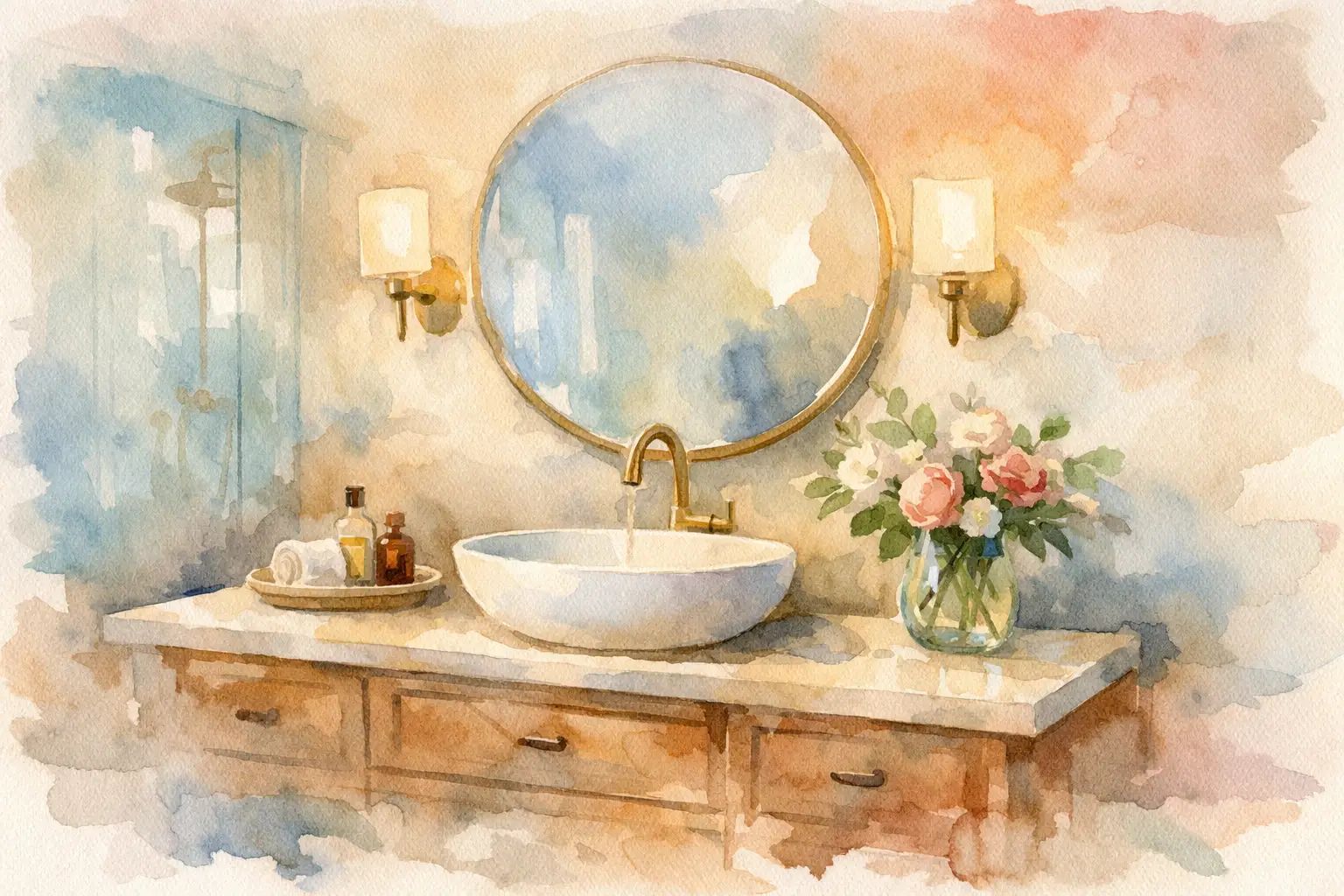
A bathroom vanity can look perfect in a showroom and still be wrong for your home. We see that happen when homeowners fall for a finish or a sink style before thinking about traffic flow, storage, or who uses the bathroom every day. If you’re figuring out how to choose bathroom vanity options for your remodel, the best place to start is not color or hardware. It is how the space needs to work.
That matters even more in bathrooms that already feel tight, dated, or awkward. The vanity is one of the hardest-working pieces in the room. It affects storage, cleaning, lighting, plumbing layout, mirror placement, and how comfortably two people can get ready at the same time. A good choice makes the whole bathroom feel easier to use. A bad one becomes something you notice every morning.
Before you compare styles, think about who uses the bathroom and what frustrates them now. A hall bath for kids usually needs different storage than a primary bath shared by two adults. A powder room can be more design-forward because it gets lighter use, while a busy family bathroom needs surfaces and drawers that hold up over time.
This is where practical decisions beat impulse buys. If electric toothbrushes, hair tools, backup toiletries, and cleaning supplies are always crowding the counter, your vanity needs to solve that. If the room feels cramped when cabinet doors open, drawer layout matters more than overall width. If one person gets ready much earlier than the other, lighting and sink placement may be just as important as storage.
The right vanity should support your routine, not force you to work around it. That sounds simple, but it is often the difference between a bathroom that only looks updated and one that truly functions better.
Most vanity mistakes start with scale. Homeowners either go too small and lose useful storage, or go too large and crowd the room. The vanity should fit the bathroom comfortably, with enough clearance for doors, drawers, and normal movement.
Measure the wall where the vanity will go, but do not stop there. You also need to account for the toilet, shower door swing, walking space, and how drawers open. In older homes especially, bathrooms may have tight layouts or uneven walls that make a standard vanity size less straightforward than it seems.
A bigger vanity is not always the better vanity. If it blocks movement or makes the bathroom feel pinched, the room will never feel right. On the other hand, going too narrow can leave you with very little counter space and limited storage. In many remodels, finding the right size means balancing presence with breathing room.
Height matters too. Standard vanity heights still work in many homes, but comfort-height vanities are often preferred because they feel more natural for adults. That said, in a kids’ bathroom or a bath designed for specific accessibility needs, the best height may be different. This is one of those decisions where the “best” answer depends on who uses the room most.
This question gets a lot of attention, and for good reason. A double vanity sounds like an automatic upgrade, but it only makes sense if the room is large enough and your routine actually benefits from it.
In a primary bathroom, two sinks can reduce bottlenecks and give each person dedicated space. That can be a real quality-of-life improvement. But double sinks also take up more counter space and more cabinet room than many people expect. Sometimes a well-designed single-sink vanity with generous drawers is more useful than squeezing in two small sinks with almost no landing space.
In smaller bathrooms, forcing a double vanity into the layout often creates more problems than it solves. Counter space shrinks, storage becomes choppy, and the room can feel crowded. If your goal is a bathroom that feels calm and easy to use, it is worth asking whether two sinks are helping or just sounding good on paper.
Vanity storage is where daily convenience really shows up. Open shelving can look nice, but it rarely replaces closed storage in a hardworking bathroom. Most homeowners need drawers, not just cabinet doors. Drawers make it much easier to organize smaller items and actually reach what is stored in the back.
This is especially important for busy households. Deep drawers for hair tools, interior organizers for toiletries, and better use of vertical space can keep counters clear and routines smoother. If the bathroom currently lacks linen storage, the vanity may need to do more of that work.
There is also a difference between having storage and having useful storage. A vanity with a lot of decorative framing can cut into interior capacity. Plumbing can eat up cabinet space under the sink. That is why layout matters as much as total size.
Bathrooms deal with water, humidity, toothpaste splatter, cosmetics, and constant cleaning. A vanity has to handle real life, not just look good on installation day.
Solid wood can be an excellent choice, but quality construction matters more than the label alone. Plywood boxes generally hold up better than cheaper particleboard options, especially in damp spaces. Some lower-cost vanities look fine at first but start to swell, peel, or loosen around the edges over time.
The countertop matters too. Quartz is a popular choice because it is durable, low maintenance, and consistent in appearance. Natural stone has appeal, but it may need more upkeep depending on the material. Cultured marble and solid-surface tops can also be practical in the right project, especially if you want a clean look and easier maintenance.
For families, easy cleaning usually deserves more weight than trend appeal. If you know a surface will show every water spot or require more upkeep than you want to give it, that is worth considering now instead of later.
A vanity should feel like it belongs in the bathroom and in the home overall. That does not mean everything has to match perfectly, but the style should make sense with the rest of the renovation.
Floating vanities can make a small bathroom feel more open, and they offer a clean, modern look. But they typically provide less storage than a full furniture-style vanity, and they may not be the best fit for every household. Freestanding vanities can add character and warmth, especially in homes with more traditional or transitional design. Built-in styles often maximize storage and create a more tailored feel.
Finish is another place where balance matters. Painted vanities can brighten the room and offer a custom look, while stained wood adds warmth and can be more forgiving in certain settings. Bold colors can work beautifully, but only if the rest of the room supports them. If you are investing in a long-term remodel, it usually makes sense to choose a style you will still like years from now, not just what is having a moment.
Sometimes the vanity you want is not the vanity that fits the existing plumbing, wall conditions, or room layout without added work. That does not mean you cannot make changes, but it does affect cost, timing, and project scope.
Moving plumbing can be worthwhile in a full bathroom remodel, especially if it improves function or allows a better layout. But if you are trying to control budget, keeping certain elements in place may open up more room for better cabinetry, countertops, tile, or lighting. This is one reason vanity selection works best when it is part of the larger plan, not a standalone purchase made too early.
A good remodel looks at the whole room together. Mirror size, lighting placement, outlet locations, faucet reach, and backsplash height all connect back to the vanity. When those decisions are coordinated, the finished bathroom feels intentional instead of pieced together.
There is a wide price range in bathroom vanities, and the cheapest option is not always the most affordable in the long run. If a vanity wears out quickly, lacks storage, or creates layout problems, replacing it later costs more than choosing wisely the first time.
That does not mean you have to chase the highest-end product. It means focusing on what delivers daily value: durable materials, smart storage, solid construction, and a size that fits the room properly. In many bathroom remodels, the best investment is not the flashiest vanity. It is the one that makes the room easier to live with every day.
For homeowners planning a larger renovation, this is where working with an experienced remodeling team can make the decision easier. A family-owned contractor like 3C Remodeling and Construction can help you weigh style, layout, budget, and practical use together instead of treating the vanity like an isolated choice.
If you are still deciding how to choose bathroom vanity options for your home, step back and picture an ordinary weekday morning. The right answer is usually the one that makes that moment feel simpler, cleaner, and less cramped.
Business Name: 3C Remodeling and Construction
Address: 1902 Campus Pl Suite 12, Louisville, KY 40299
Phone: 502-827-1361
Business Hours:
Mon - Fri: 08:00 AM to 05:00 PM
Sat-Sun: Closed
Referral program available