
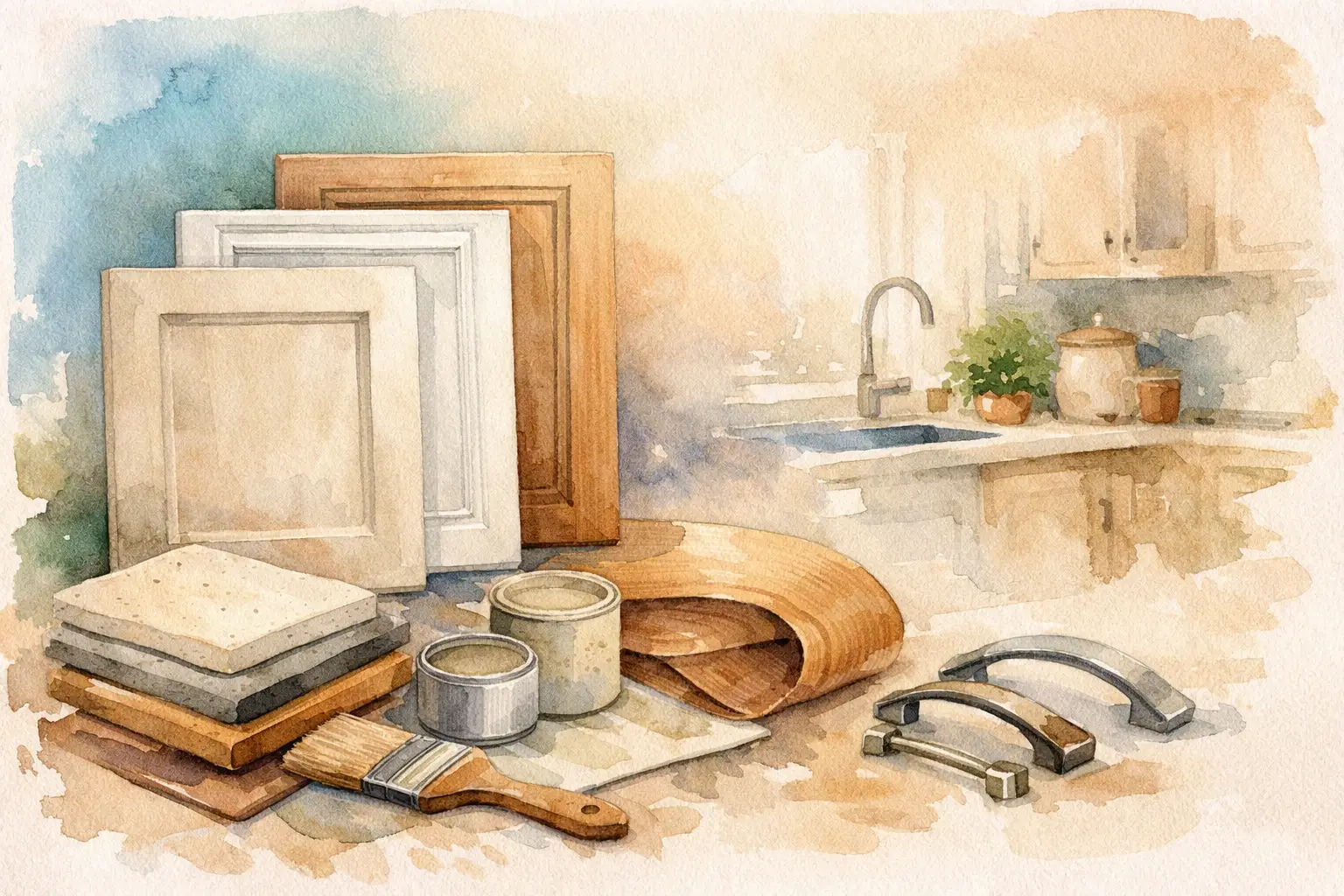
If your cabinet boxes are still solid but the doors, drawer fronts, and finish feel tired, a cabinet refacing material review can save you from making an expensive mistake. The material you choose affects more than appearance. It changes how your kitchen handles heat, moisture, daily wear, cleaning, and how long that fresh update still looks fresh.
Refacing can be a smart option when your kitchen layout works, your cabinet structure is in good shape, and you want a noticeable improvement without the time and disruption of a full tear-out. But not every refacing material performs the same way in a busy home. A kitchen used by a family with kids, pets, and constant traffic has different needs than a lightly used space in a downsizing home.
Most homeowners start with color and door style. That makes sense because those are the first things you see. But material choice should come first, because it affects durability, repairability, cost, and long-term satisfaction.
When we evaluate refacing materials, we look at a few practical questions. How well does it resist peeling or chipping? Can it handle humidity near the dishwasher or sink? Will it hold up around ovens and coffee stations? Does it look believable in the style of home you have? And if something gets damaged, can it be repaired without replacing half the kitchen?
Those are the kinds of details that matter once the excitement of picking finishes wears off and real life takes over.
Wood veneer is a thin layer of real wood applied over a stable core or over existing cabinet surfaces during the refacing process. For homeowners who want an authentic wood look, this is usually the closest match to new wood cabinetry without replacing everything.
The biggest advantage is appearance. Real wood veneer has natural variation, texture, and warmth that manufactured surfaces try to imitate but rarely match perfectly. It also offers flexibility if you want a stained finish rather than paint.
The trade-off is that wood veneer requires a little more respect in daily use. It can scratch, and in some conditions it may react more to humidity than synthetic options. It is durable when properly installed and finished, but it is not the most forgiving material if your kitchen sees a lot of abuse. It is often a strong choice for homeowners who care deeply about a natural, higher-end look and are willing to maintain it.
Thermofoil uses a vinyl layer that is heat-formed over an engineered wood core, typically MDF. It became popular because it can create a smooth, clean finish at a lower price point than many wood-based options.
For some kitchens, thermofoil can look sharp and consistent. It is easy to clean, and the uniform finish appeals to homeowners who want a simple painted-style appearance. White and light neutral thermofoil doors are especially common.
Where thermofoil can struggle is heat exposure. Cabinets too close to ovens, toaster ovens, or other heat sources may be more vulnerable to peeling over time. Once peeling starts, repair options are limited. This does not mean thermofoil always fails, but it does mean installation conditions and kitchen habits matter. If your kitchen runs hot or you use a lot of countertop appliances, this is worth taking seriously.
Laminate is one of the more durable and practical choices in a cabinet refacing material review. It is made by bonding a decorative surface layer to a substrate, creating a finish that holds up well to scratches, stains, and moisture in many everyday situations.
Laminate tends to work especially well in active households where ease of maintenance matters. It is available in a wide range of colors and patterns, including wood-look designs and modern solid finishes. If your priority is function first, laminate deserves a close look.
Its main drawback is aesthetic, and this depends on the product quality. Lower-end laminates can look flat or artificial compared to real wood. Edge details may also be less refined depending on the door style. But higher-quality laminate products have improved significantly, and for many homeowners the durability-to-cost ratio makes a lot of sense.
In some refacing projects, the cabinet boxes are resurfaced while the doors and drawer fronts are replaced with solid wood or wood-based components. This can create a more substantial, custom feel than some lower-cost refacing systems.
The appeal is straightforward. Solid wood doors feel sturdy, can be painted or stained in many styles, and generally fit well in traditional, transitional, and many upscale kitchen designs. If you want the look of a more complete remodel while keeping the existing cabinet footprint, this can be a strong middle ground.
The trade-off is cost. Solid wood options usually sit higher on the price range, and they can still move slightly with changes in humidity. That movement is normal, but it is part of owning real wood. For many homeowners, the added warmth and quality are worth it.
If your top priority is durability with easy cleaning, laminate often performs very well. If your top priority is a natural, upscale appearance, wood veneer or solid wood door components usually come out ahead. If your top priority is budget, thermofoil may look appealing, but it needs to be chosen carefully based on kitchen conditions.
That is why there is no one-size-fits-all winner in a cabinet refacing material review. The best material depends on how you cook, how often the kitchen gets used, where the heat sources are, and how long you plan to stay in the home.
A family kitchen in Louisville with heavy daily use may benefit from a tougher, lower-maintenance surface. A homeowner updating a well-kept kitchen before aging in place may put more value on warmth and appearance. Both are reasonable goals, but they lead to different material choices.
The least expensive option upfront is not always the best value over time. If a lower-cost material looks dated quickly, shows wear early, or cannot be repaired easily, the savings may disappear faster than expected.
On the other hand, paying for the most premium material is not always necessary either. If your kitchen update is part of a larger remodeling plan down the road, a practical mid-range refacing material may be the smarter move right now.
What matters is matching the investment to the condition of the kitchen, the expected lifespan of the update, and the way your household actually functions. That is where an experienced remodeling team can help separate good value from false economy.
Material and style work together. A traditional kitchen with warm flooring and classic trim details may look more natural with wood veneer or solid wood doors. A more modern kitchen with simple lines and a clean color palette may suit laminate or thermofoil better.
You also want the new cabinet surfaces to make sense with the rest of the home. Refacing should feel like an intentional upgrade, not a surface-level patch that clashes with surrounding finishes. That is one reason homeowners often benefit from seeing samples in their own lighting before making a final decision.
Gloss level matters too. A super-smooth finish can look beautiful in the showroom but may show fingerprints, smudges, or minor wear more clearly in real life. That is not a dealbreaker, but it is part of choosing with your eyes open.
Refacing only works well when the cabinet boxes are structurally sound and the layout still serves your needs. If your kitchen has poor workflow, limited storage, damaged cabinet frames, or problems that go beyond worn surfaces, refacing may only delay a larger fix.
That is especially true if you are already frustrated with how the kitchen functions. New faces on old cabinets will not solve cramped prep space, awkward corner storage, or a layout that makes daily routines harder. In those cases, a broader remodel may give you much better long-term value.
At 3C Remodeling and Construction, this is often the real conversation homeowners need. Not just which finish looks nicest, but whether refacing is the right solution for the way they live.
Before you commit, ask how the material performs around heat, moisture, and impact. Ask what happens if a door is damaged in a few years. Ask how the edges are finished, what the cleaning requirements are, and whether the appearance will stay consistent over time.
You should also ask to compare samples in person. Photos tend to flatten differences that become obvious once you see sheen, texture, and color variation up close. A material that looks great online can feel completely different in your kitchen.
A good contractor should be comfortable walking you through trade-offs without pushing one option for every project. That kind of guidance usually leads to better decisions and fewer regrets.
The right refacing material is the one that fits your kitchen, your budget, and your everyday routine without asking you to baby it. When you choose from that point of view, the result usually feels better year after year, not just on install day.
Business Name: 3C Remodeling and Construction
Address: 1902 Campus Pl Suite 12, Louisville, KY 40299
Phone: 502-827-1361
Business Hours:
Mon - Fri: 08:00 AM to 05:00 PM
Sat-Sun: Closed
Referral program available