
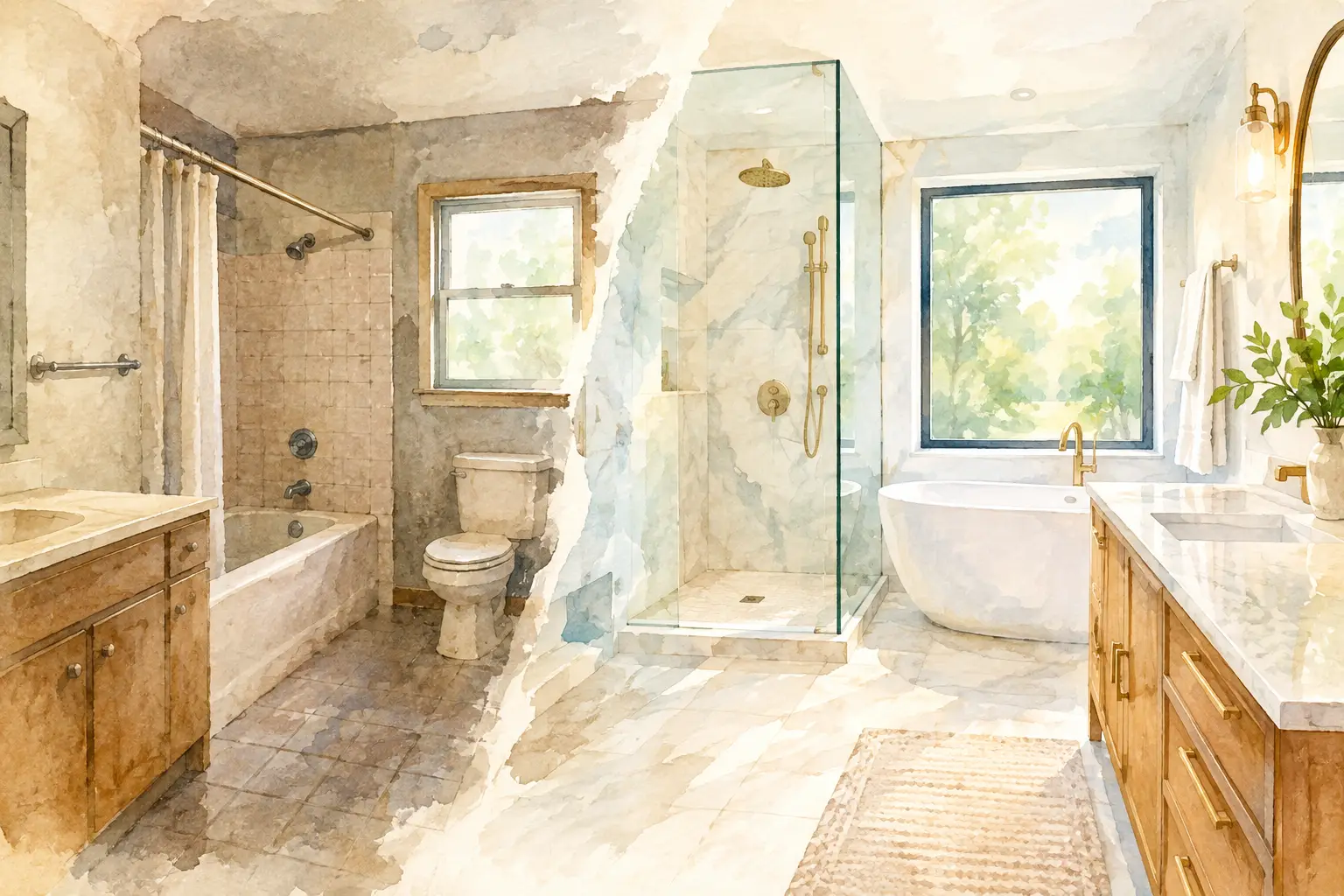
A bathroom rarely fails all at once. More often, it becomes harder to use: the vanity is crowded, the shower is difficult to clean, there is nowhere to put towels, and the room never quite feels fresh. If you are asking, “when should you remodel a bathroom?” the answer usually comes down to a mix of condition, daily frustration, future plans, and budget.
A well-planned bathroom remodel is more than a cosmetic update. It can correct water-related problems, improve storage and lighting, create a safer bathing space, and make busy mornings run more smoothly. For homeowners in the Louisville area, the right time is not always when a room looks dated. It is when the bathroom no longer supports the way your household lives.
The most urgent reason to remodel is a water problem. Peeling paint, soft flooring, loose tile, recurring mildew, water stains on the ceiling below, or a musty odor can all point to moisture getting where it should not. A leaking fixture may seem minor, but hidden water damage can affect subflooring, wall framing, and nearby rooms. Addressing the source early can prevent a smaller remodeling project from becoming a major repair.
Not every issue is an emergency, though. Many homeowners choose to remodel because the layout has become a daily inconvenience. A narrow vanity with no counter space, a shower door that collides with the toilet, or a tub that is rarely used can make even a clean bathroom feel inadequate. If you find yourself constantly working around the room rather than comfortably using it, a remodel can be a practical investment.
Age and wear matter, too. Bathrooms typically see more moisture, traffic, and cleaning products than most rooms in a home. Cracked grout, damaged caulk, outdated plumbing fixtures, worn cabinets, and poor ventilation can be signs that the space is nearing the end of its useful life. Surface updates may help for a while, but repeated repairs are often a signal to consider a more complete plan.
Waiting until a bathroom is unusable is not always the best financial approach. A planned remodel gives you time to make thoughtful decisions about the layout, finishes, fixtures, and budget. An emergency repair can limit those choices, especially when water damage requires immediate action.
For example, replacing a leaking shower can be an opportunity to improve more than the shower itself. You may decide to add a recessed niche for toiletries, update old lighting, install a better exhaust fan, or choose flooring that is easier to maintain. If the vanity offers limited storage, a redesigned cabinet layout can reduce clutter without making the room feel crowded.
That said, not every aging bathroom needs to be completely rebuilt. If the layout works well and the underlying structure is sound, a focused renovation may be enough. New flooring, a vanity, lighting, paint, fixtures, and updated shower finishes can make a meaningful difference. The right scope depends on what is behind the walls as well as what you see every day.
The best bathroom designs begin with real routines, not just a photo of a beautiful finished room. Think about what happens there on a normal weekday morning. Is more than one person trying to get ready at once? Are toiletries taking over every available surface? Does the room have enough lighting for shaving, makeup, or helping children get ready?
A remodel can solve problems that are easy to overlook until they happen every day. A double vanity may make sense for a shared primary bathroom, while a larger single vanity with drawers may be more useful in a hall bath. Converting an unused tub to a walk-in shower can create a more comfortable bathing experience. In a smaller bathroom, changing the door swing or moving a fixture may improve traffic flow without increasing the room’s footprint.
Storage is another common reason to remodel. Older bathrooms often rely on a small vanity and a medicine cabinet, leaving towels, cleaning supplies, and personal items without a home. Built-in cabinetry, deeper drawers, linen storage, and well-placed niches can make the room easier to keep organized. These are the details that make a renovation feel better long after the new finishes lose their novelty.
A bathroom remodel is also a chance to think ahead. Homeowners planning to stay in their homes for many years may want features that support comfort and mobility over time. A curbless or low-threshold shower, wider clearances, grab-bar blocking installed behind the wall, slip-resistant flooring, and brighter lighting can be smart choices without making the room feel institutional.
If a move may be in your future, you may approach the project differently. An updated bathroom can strengthen a home’s appeal, especially when it looks clean, functional, and consistent with the rest of the house. Buyers often notice bathrooms quickly because renovations are disruptive and expensive to take on after closing.
Still, resale should not be the only reason to remodel. Over-improving a bathroom for a future buyer while living with an inconvenient space for years is rarely satisfying. Choose a level of finish that fits your home, neighborhood, and budget, but make decisions that improve your life now.
There is no single best season for a bathroom renovation. Because the work is indoors, it can be completed throughout the year. The better question is whether the timing works for your household.
A bathroom project can temporarily take that room out of service, so consider school schedules, holidays, travel, family events, and how many other bathrooms are available. Remodeling a primary bathroom may be easier when a guest bath can handle the extra use. If your home has only one full bathroom, careful planning becomes even more important.
It is also wise to start conversations before you feel rushed. The design and selection process takes time, particularly when you are making decisions about tile, cabinetry, plumbing fixtures, lighting, and layout changes. Beginning early gives you room to compare options and avoid choices made under pressure.
A refresh can be a good option when the room is fundamentally functional. Repainting, replacing a vanity, updating the mirror and lighting, changing fixtures, and installing new flooring can improve a bathroom without altering plumbing or walls. This approach is often appropriate for a powder room or a bath with a workable layout and no signs of moisture damage.
A full remodel is usually worth considering when there are active leaks, poor ventilation, failing surfaces, outdated plumbing, or a layout that does not work for your family. It is also the better path when changes require opening walls, moving fixtures, expanding a shower, or correcting construction issues from an earlier renovation.
The trade-off is straightforward: a smaller update may cost less upfront, but it will not solve problems hidden behind walls or limitations built into the layout. A larger renovation requires more planning and investment, yet it can deliver a bathroom that functions well for many years instead of simply looking newer.
Before choosing tile or scrolling through vanity styles, identify what you want the bathroom to do better. Maybe you need a safer shower, easier cleaning, more storage, better lighting, or a layout that works for two people at once. A clear list of priorities helps separate must-haves from nice-to-haves and keeps the project focused.
An experienced remodeling partner can assess the room’s condition, talk through realistic options, and explain where your budget will have the greatest impact. At 3C Remodeling and Construction, our family-owned team helps homeowners turn everyday frustrations into practical, tailored bathroom spaces built around how they live.
The right time to remodel is often before the bathroom becomes a crisis. When the room is showing wear, creating daily stress, or no longer fitting your plans for the home, a thoughtful renovation can bring comfort, function, and confidence back to one of the hardest-working spaces in the house.
Business Name: 3C Remodeling and Construction
Address: 1902 Campus Pl Suite 12, Louisville, KY 40299
Phone: 502-827-1361
Business Hours:
Mon - Fri: 08:00 AM to 05:00 PM
Sat-Sun: Closed
Referral program available