A cabinet door that will not stay aligned, drawers that stick every morning, and shelves that sag under everyday dishes usually tell the story before the room does. If you are asking when should cabinets be replaced, the answer is rarely just about style. It usually comes down to function, condition, and whether your current kitchen or bathroom still supports the way your household actually lives.
For some homeowners, cabinet replacement becomes necessary after years of wear. For others, the cabinets are technically still standing, but the layout, storage, and flow are working against them every day. That is where the decision gets more nuanced.
Cabinets should usually be replaced when the boxes are failing, moisture damage is spreading, storage no longer fits your needs, or the overall layout needs to change. Cosmetic issues alone do not always justify full replacement. But once structural problems start showing up, repairs often become a short-term fix for a long-term problem.
A loose hinge or a damaged drawer slide is one thing. Soft cabinet boxes, peeling laminate from humidity, cracked face frames, and doors that never seem to sit right even after adjustment are another. When the cabinet structure itself is compromised, putting money into repeated repairs can become frustrating and expensive.
Age matters too, but not in a simple way. Some older cabinets were built well and can last a long time. Others may look solid at first glance but have particleboard interiors, weak joints, or outdated dimensions that make them less practical for modern storage. If your cabinets are older and showing multiple signs of wear at once, replacement often makes more sense than piecemeal fixes.
The first major sign is water damage. In kitchens and bathrooms, moisture is one of the biggest reasons cabinets fail. Swollen sides, bubbling finishes, warped doors, and soft areas around the sink are red flags. Once water has worked its way into the cabinet material, especially lower-grade engineered wood, the damage usually keeps getting worse.
The second sign is structural weakness. Shelves that bow, cabinet boxes that pull away from the wall, drawer bottoms that give out, and doors that no longer close properly can all point to a cabinet system that is wearing down past the point of easy repair. A good cabinet should hold up to daily use without constant adjustment.
The third sign is poor function. This gets overlooked because it does not always look dramatic. But if your kitchen feels crowded, you have wasted corner space, not enough drawer storage, or cabinets that force you to bend, stack, and dig for basic items, replacement may be the better investment. In many homes, the real problem is not just cabinet wear. It is that the space was never designed for how the family uses it today.
A fourth sign is mismatched updates. If you are replacing countertops, changing appliances, or reworking the room layout, keeping old cabinets can limit the entire project. New appliances may not fit cleanly. Countertop installation may expose out-of-level cabinet runs. You can end up spending money around the cabinets while leaving the biggest functional issue untouched.
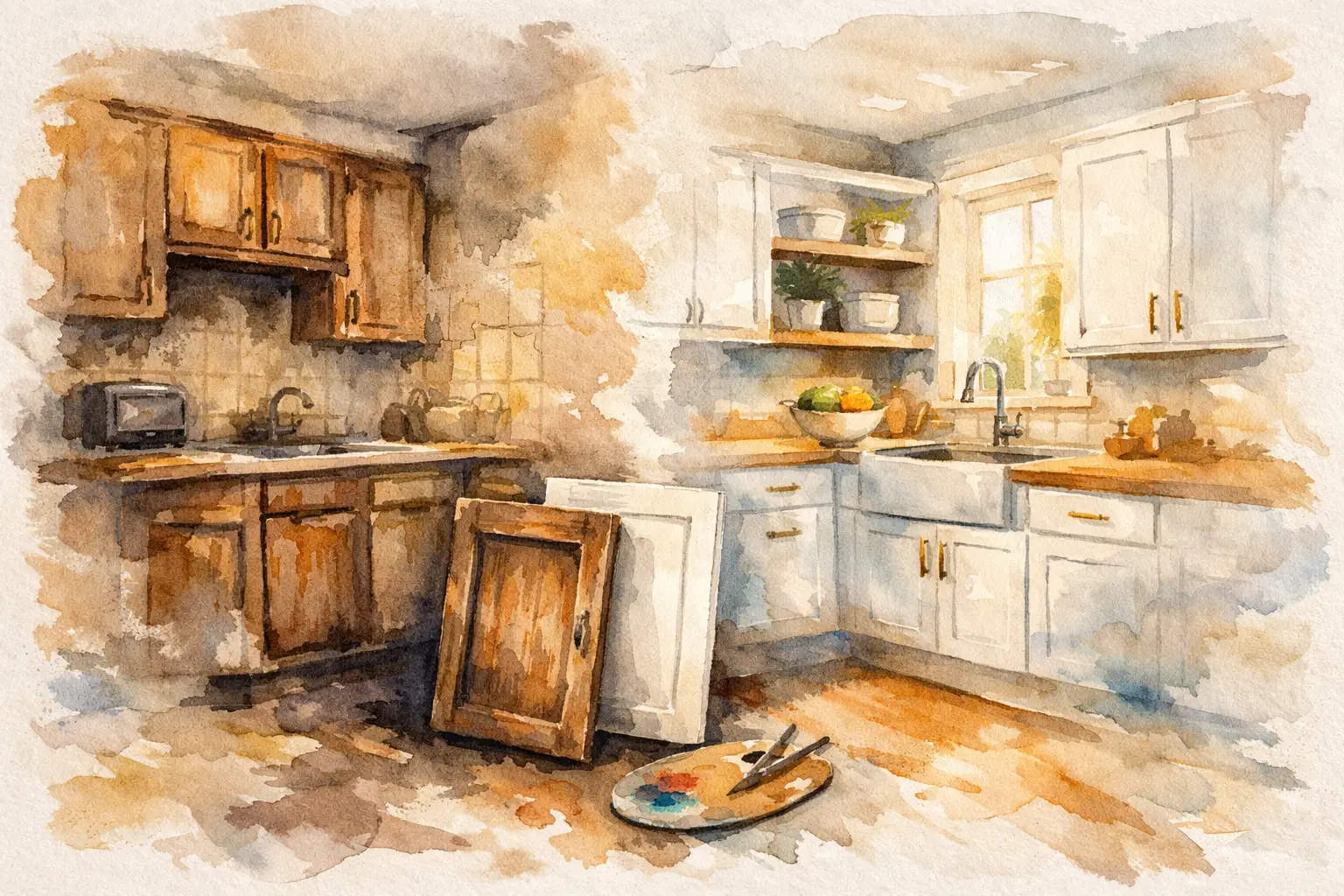
Not every cabinet problem means total replacement. If the cabinet boxes are solid, the layout works, and the main issue is worn doors, dated finishes, or minor hardware problems, a lighter-touch solution may be enough.
Refacing can make sense when homeowners want a fresh look without changing the room footprint. It can also be a smart option for budget-conscious projects where the cabinet structure is still in good shape. Replacing hardware, repairing drawer glides, or updating select panels can extend the life of quality cabinets.
The key question is whether you are solving a surface problem or a deeper one. If your frustration is mostly visual, you may not need new cabinets. If your frustration is daily function, limited storage, or cabinet failure, cosmetic work may only delay the real decision.
During a larger remodel, cabinet replacement often becomes the right choice when you want to improve the layout, add storage, or create better flow in the room. This is especially true in kitchens where cabinet placement affects prep space, traffic patterns, and appliance locations.
For example, if you want a larger island, more usable pantry storage, deeper drawers for pots and pans, or better organization near the cooking area, replacement gives you flexibility that repairs and refacing cannot. The same applies in bathrooms where homeowners want more vanity storage, improved counter space, or a better fit for the room.
This is where planning matters. Many homeowners start by thinking they need a style update, then realize the room has bigger issues. Maybe the trash pull-out is missing, the corner cabinets waste space, or there is not enough storage for everyday routines. Replacing cabinets within a remodel gives you the chance to fix those problems while everything is already being addressed.
Budget is part of the decision, and it should be. Full cabinet replacement is a bigger investment than repairs or refacing. But cost should be measured against how long the solution will last and what problems it actually solves.
If you spend money every year adjusting doors, replacing hardware, touching up damaged surfaces, and working around poor storage, the lower-cost option may not be saving you much in real terms. It may just be spreading the expense out while the frustration continues.
On the other hand, if your cabinet boxes are in strong condition and your goals are mostly cosmetic, full replacement may be more than you need. A good remodeling partner should help you sort that out honestly instead of pushing one answer for every home.
A lot of homeowners assume cabinets should be replaced only when they are visibly damaged. But some of the strongest reasons have more to do with layout than wear.
If your kitchen lacks landing space near appliances, if multiple people cannot move through it comfortably, or if you have too much upper cabinetry and not enough practical base storage, replacement can improve daily life in a way that paint and new doors never will. The same goes for bathrooms with cramped vanities, poor drawer access, or storage that does not match the needs of the household.
This is especially common in older homes around Louisville and nearby communities, where the original cabinet layout may reflect a very different era of cooking, entertaining, and family use. Replacing cabinets can be the moment when a room finally starts working the way it should.
A useful test is to separate what you dislike from what no longer works. If you dislike the color, the style, or the finish, you may have options short of replacement. If cabinets are damaged, hard to use, badly placed, or limiting a larger remodel, replacement is probably the right move.
It also helps to look at the room as a whole. Are you planning to stay in the home? Are countertops, flooring, or appliances also due for updating? Is the current storage creating daily stress? If the answer to several of those questions is yes, replacing the cabinets as part of a broader improvement plan can give you a much better result than tackling isolated issues one at a time.
Homeowners often feel pressure to squeeze a few more years out of failing cabinets because replacement sounds like a major step. Sometimes that is wise. Sometimes it only delays a project that would improve comfort, storage, and resale value much sooner. The right answer depends on condition, budget, and what you want the room to do for you.
A good remodeling conversation should leave you with clarity, not pressure. If your cabinets are showing signs of damage, no longer support your routine, or are holding back a better layout, it may be time to stop asking how to make them work and start asking what a better space could look like.
Business Name: 3C Remodeling and Construction
Address: 1902 Campus Pl Suite 12, Louisville, KY 40299
Phone: 502-827-1361
Business Hours:
Mon - Fri: 08:00 AM to 05:00 PM
Sat-Sun: Closed
Referral program available