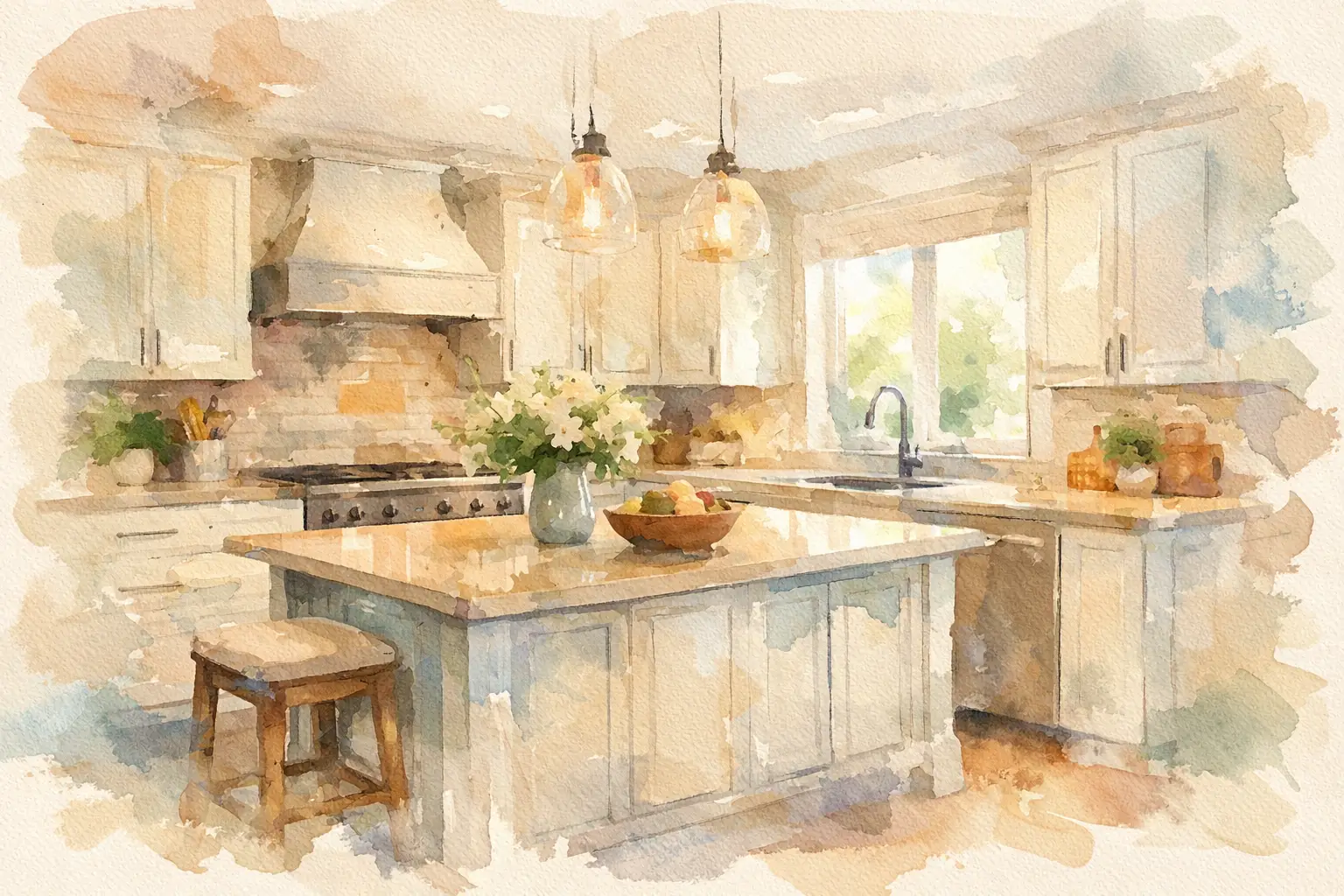
If your kitchen still works but looks tired every time you walk into it, kitchen refacing Louisville homeowners choose most often may be the right middle ground. You keep the basic cabinet structure, update the visible surfaces, and give the room a cleaner, more current look without tearing everything down to the studs. For many families, that means less disruption, a more manageable investment, and a kitchen that feels better to live in.
That said, refacing is not the right answer for every kitchen. Some spaces need more than a cosmetic update. The key is knowing when refacing makes sense, when it does not, and how to plan a project that actually improves your day-to-day routine instead of just changing the color of your cabinet doors.
Kitchen refacing is a cabinet update that focuses on what you see and touch most. Existing cabinet boxes stay in place if they are structurally sound, while doors, drawer fronts, hardware, and exterior finishes are replaced or covered with new materials. In many projects, homeowners also add details like soft-close hinges, updated pulls, crown molding, or matching panels to create a more complete finished look.
For a lot of homes in Louisville and nearby communities, this works well because the cabinet layout is still functional even if the finish is dated. Maybe the oak doors scream 1998, but the cabinet boxes themselves are solid. Maybe the kitchen feels dark and worn, but you do not necessarily need to move plumbing, knock down walls, or rebuild the entire footprint. Refacing can bridge that gap.
It is best thought of as a strategic update, not a shortcut. Done well, it can make a kitchen look dramatically different. Done poorly, it can leave you with new surfaces covering old problems.
The best candidates for kitchen refacing usually have a layout that already works fairly well. If you have enough cabinet storage, your traffic flow is decent, and the cabinet boxes are in good condition, refacing can be a smart move. Many homeowners choose it when they want a fresh look, want to improve resale appeal, or simply want a kitchen that feels cleaner and brighter without the timeline and cost of a full renovation.
Refacing also makes sense when your biggest frustrations are visual rather than structural. Maybe the cabinet doors are worn, the finish is chipped, and the hardware is outdated. Maybe the kitchen feels heavier and darker than the rest of the home. Those are the kinds of problems refacing can solve effectively.
Budget is another common reason. A full kitchen remodel involves more labor, more materials, and often more decisions. If your cabinets are worth keeping, refacing can direct your investment toward the parts of the kitchen that make the biggest visible impact.
Refacing is not the answer if your kitchen has deeper functional issues. If your cabinet boxes are damaged, poorly built, out of square, or showing signs of moisture wear, putting new fronts on them may not be a good long-term value. The same is true if your current layout frustrates you every day.
For example, if there is never enough prep space, if the refrigerator blocks walkways, or if storage is constantly awkward, new cabinet doors will not solve those problems. You may need a more complete remodel that reworks layout, storage, and flow.
This is where honest project guidance matters. A good contractor should not push refacing simply because it sounds easier. Sometimes the better investment is a larger renovation that fixes the real problem instead of dressing it up.
A refacing project can do more than swap out old doors. The visual transformation often comes from a combination of updates that work together. Lighter finishes can open up a dark kitchen. New hardware can make cabinets feel more current and easier to use. Matching end panels, trim, and molding can pull together an older kitchen that once looked pieced together.
Depending on project scope, homeowners may also pair refacing with countertop replacement, backsplash updates, sink and faucet changes, or lighting improvements. That combination often creates the biggest payoff because the cabinets no longer look new next to worn-out surrounding finishes.
This is one of the biggest trade-offs to understand. Refacing can refresh the kitchen, but if everything else around the cabinets is visibly dated, the result may feel partial. In some homes, that is perfectly fine. In others, it makes sense to plan a broader update so the room feels cohesive.
One reason kitchen refacing appeals to busy households is that it is generally less disruptive than a full remodel. Since the cabinet boxes stay in place, demolition is reduced and the work tends to move faster. That matters when your kitchen is central to family life and you are trying to keep routines intact.
Cost is usually lower than complete cabinet replacement, but the final number still depends on materials, kitchen size, door style, hardware, trim details, and whether you are combining refacing with counters or other upgrades. Homeowners sometimes assume refacing is always inexpensive. That is not necessarily true. Quality materials and skilled installation still matter, and custom details can move the price upward.
The better way to think about it is value. If your existing cabinets are solid and your layout works, refacing can help you avoid paying for demolition and reconstruction you do not need. If your kitchen has major functional problems, spending less upfront on refacing may not feel like savings if you end up wanting a full remodel later.
The easiest test is to separate appearance problems from function problems. If you mostly dislike how the kitchen looks, refacing may be enough. If you dislike how the kitchen works, you are probably looking at remodeling.
Ask yourself a few practical questions. Do you like where your cabinets are located? Is there enough storage for the way your family cooks and lives? Are your drawers and doors operating well? Do you want a different layout, an island, or better traffic flow? Those answers usually point clearly in one direction.
This is also where a local, experienced contractor can be especially helpful. In older homes around Louisville, kitchens often have quirks that are not obvious until someone with remodeling experience looks closely. Floors may be uneven, walls may be out of line, and past updates may have left behind hidden limitations. A realistic assessment saves time and frustration.
Refacing sounds straightforward, but quality matters more than many people expect. The finished kitchen depends on accurate measuring, careful surface prep, clean installation, and good design coordination. If the colors, materials, or trim details are off, the project can look patched together instead of polished.
Look for a contractor who listens first. You want someone who asks how you use the kitchen, what bothers you most, and whether refacing truly fits your goals. You also want clear communication about what is being updated, what is staying, and where the limits are. That kind of honesty reduces surprises.
For homeowners who may be weighing refacing against a broader renovation, working with a full-service remodeling company can help. A team with experience in both kitchen updates and full remodels can guide you toward the right scope instead of forcing every project into the same box. That is a big part of how 3C Remodeling and Construction approaches kitchen work – not as a one-size-fits-all service, but as a solution built around how the homeowner actually lives.
The best refacing projects are the ones that solve the right problem. Sometimes that means giving solid cabinets a fresh start and bringing the whole room back to life. Other times, it means recognizing that your kitchen needs more than a surface update.
If you are considering kitchen refacing, start with an honest look at how your kitchen functions each day. A good project should make mornings easier, cooking less frustrating, and the room more enjoyable to spend time in. That is usually the clearest sign you are making the right investment.
Business Name: 3C Remodeling and Construction
Address: 2185 Watterson Trail, Louisville, KY 40299
Phone: 502-827-1361
Business Hours:
Mon - Fri: 08:00 AM to 05:00 PM
Sat-Sun: Closed
Referral program available