
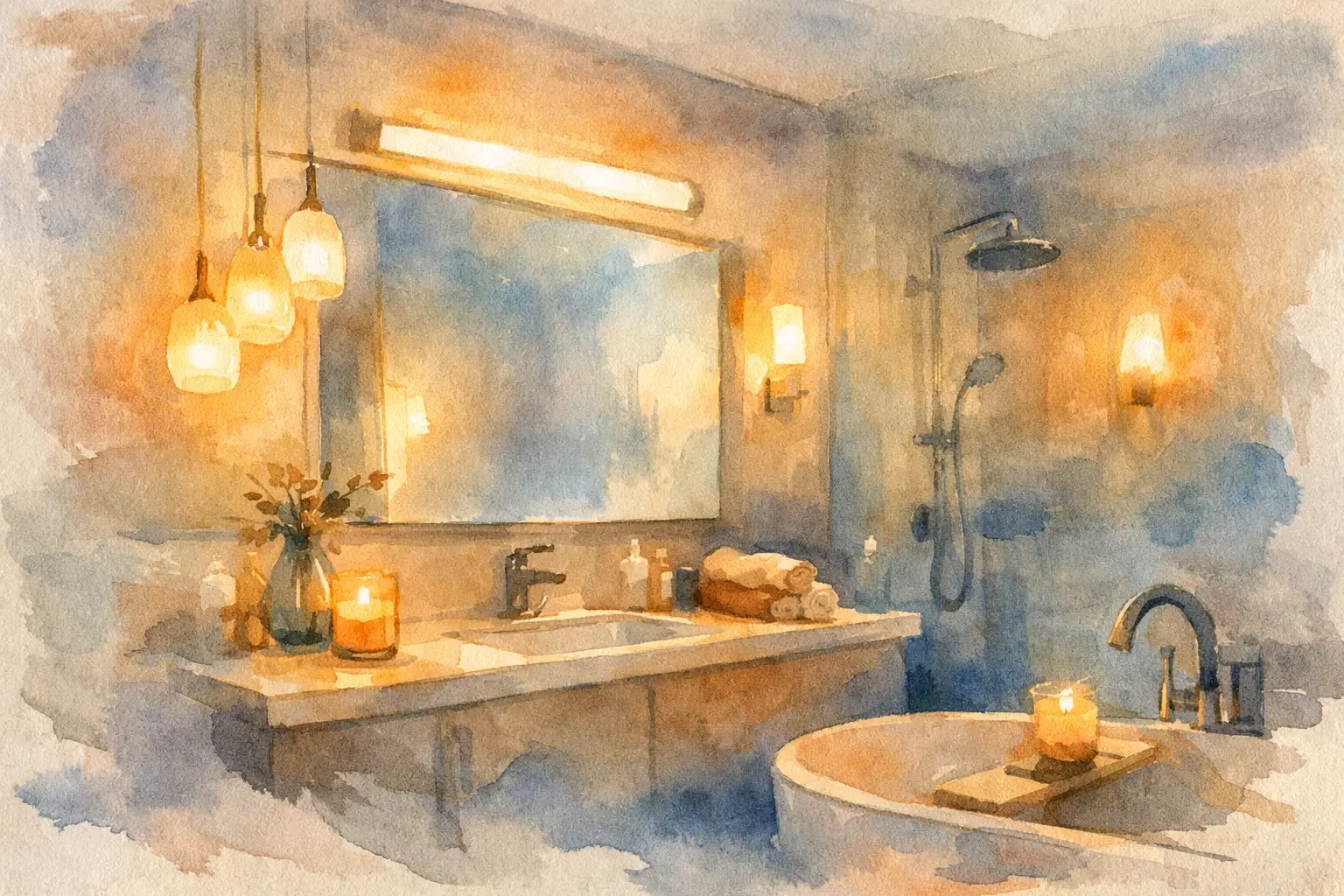
A bathroom can have beautiful tile, a new vanity, and plenty of storage, yet still feel unfinished when the lighting is wrong. Shadows at the mirror, a dim shower, or one harsh ceiling fixture can make everyday routines less comfortable. Knowing how to design bathroom lighting means planning for how your household actually uses the room, from early-morning grooming to a relaxing bath at night.
Good lighting is not just about choosing attractive fixtures. It affects safety, color accuracy, comfort, and how large or welcoming the room feels. During a bathroom remodel, lighting should be considered alongside the layout, vanity size, mirror selection, shower design, and electrical plan – not left until the final decorating decisions.
Before selecting a fixture, think through what happens in the room. A shared family bathroom needs bright, dependable light for busy mornings. A primary bathroom may need that same task lighting at the vanity, plus softer options for winding down in the evening. A small guest bath may need a simpler approach, but it should still feel inviting and easy to use.
The room’s layout matters just as much. A double vanity requires more evenly distributed light than a single sink. A shower without natural light needs dedicated illumination. If a toilet is tucked into a separate water closet, it needs its own fixture or recessed light rather than relying on spillover from the main room.
This is where a full renovation creates opportunities. Moving a vanity, enlarging a shower, or adding a linen cabinet can change where light is needed. Planning these details together helps prevent awkward shadows and last-minute fixture compromises.
The most functional bathrooms use layered lighting. Each layer has a distinct job, and together they allow the room to adapt throughout the day.
Ambient lighting is the general light that fills the room when someone walks in. It may come from a central ceiling fixture, recessed lights, or a combination of both. The goal is even coverage that makes the room feel open without creating a flat, overly bright look.
For many bathrooms, recessed ceiling lights are a clean and practical choice. They work particularly well in rooms with low ceilings or a modern, uncluttered design. A decorative flush-mount or semi-flush fixture can add personality in a larger bathroom, especially when it is centered in an open area rather than directly over the vanity.
Avoid relying on one ceiling fixture for the entire room. It may technically light the space, but it rarely provides enough focused light where it is needed most.
Task lighting is the light used for shaving, applying makeup, styling hair, putting in contacts, and other close-up routines. It is often the most important layer in the room.
The best vanity lighting illuminates the face evenly from the front and sides. A pair of sconces mounted beside the mirror is usually more flattering and functional than a light bar mounted only above it. Light from above can cast shadows under the eyes, nose, and chin, which makes grooming harder and can be frustrating when trying to see true results.
That said, the right choice depends on the vanity wall, mirror size, and available space. In a compact bathroom, a well-sized fixture above the mirror may be the most realistic option. For a double vanity, consider whether each person needs a separate mirror and dedicated side lighting. A larger shared mirror can work well, but it needs a lighting plan that reaches both sink areas evenly.
When possible, place sconces around eye level and on both sides of the mirror. The exact mounting height will vary with the homeowners’ height, the mirror dimensions, and the fixture design. A remodeling team can help coordinate these measurements before wiring is finalized.
Accent lighting is optional, but it can make a remodeled bathroom feel more thoughtful. It may include a small chandelier over a freestanding tub, toe-kick lighting beneath a floating vanity, or a recessed niche light in a shower.
This layer should support the room rather than compete with it. A statement fixture can be a beautiful focal point, but it should not be the only source of light. In a smaller bathroom, one carefully chosen decorative element is often enough.
Accent lighting is also useful for nighttime navigation. Soft under-vanity lighting can help someone move through the bathroom without switching on bright overhead fixtures and waking up fully.
A bathroom is one of the few rooms where color accuracy matters every day. You want to see makeup, clothing, skin tone, paint color, and tile as they truly appear. Look for LED bulbs with a high color rendering index, commonly called CRI. A CRI of 90 or higher is a strong choice for vanity lighting because it provides more natural-looking color.
Color temperature also changes the feel of the room. Measured in Kelvins, it describes whether light appears warm or cool. Many homeowners prefer a warm-white range around 2700K to 3000K for a comfortable residential bathroom. It feels welcoming while still offering enough clarity for grooming.
Cooler light may seem brighter, but it can make a bathroom feel clinical, especially when paired with gray tile or white cabinetry. On the other hand, very warm bulbs can look yellow and may not provide the crisp visibility some people prefer at the mirror. The right choice depends on the finishes and the atmosphere you want, but consistency matters. Mixing noticeably different bulb colors in one room can make a finished remodel look disjointed.
Bathrooms require fixtures rated for the conditions where they will be installed. Moisture is part of daily life in this room, whether from steam, splashing water, or a busy shower.
Fixtures installed in or directly near a shower need a wet-location rating. Those used in damp but not directly wet areas should be rated appropriately for damp locations. This is not simply a style decision. It is a safety and code consideration that should be handled correctly during the electrical planning stage.
Recessed shower lights are a popular option because they provide direct illumination without crowding the space. Choose a fixture designed for wet locations, and be thoughtful about placement. One light in the center may work for a standard shower, while a larger walk-in shower may need more than one fixture to avoid dark corners.
The best lighting plan can still be inconvenient if every light turns on from one switch. Separate controls give homeowners more flexibility. For example, ambient ceiling lights, vanity lights, and shower lighting can be switched independently so you only use what is needed.
Dimmers are especially valuable in a primary bathroom. They allow bright light for weekday mornings and softer light for late-night routines or a bath. Just make sure the bulbs and dimmer are compatible. Some LED bulbs flicker, buzz, or have a limited dimming range when paired with the wrong control.
A quiet exhaust fan with an integrated light or humidity sensor may also be worth considering. It can help manage moisture while keeping the room comfortable, particularly in bathrooms without a window. Convenience features should solve a real household need, not add complexity for its own sake.
Windows and skylights can make a bathroom feel brighter and more spacious, but they should not replace electric lighting. Natural light changes with the weather, time of day, and season. A bathroom that looks bright at noon may be dim during an early winter morning in Louisville.
If privacy is a concern, frosted glass, high windows, or window treatments can preserve daylight without exposing the room. When placing a mirror, consider what it will reflect. A mirror that catches window light can brighten the vanity area, while one placed directly opposite a strong window may create glare at certain times of day.
The most common mistake is treating the vanity fixture as an afterthought. The mirror, faucet, cabinetry, and lighting need to be sized and positioned together. Installing a large mirror first and trying to squeeze in lighting later often limits the best options.
Another issue is overusing recessed lights. They are useful, but a ceiling filled with evenly spaced cans can feel commercial and still leave the face in shadow. Balance them with dedicated vanity lighting and one decorative fixture when the space allows.
Finally, do not choose fixtures based on appearance alone. A fixture may fit the style of the room but provide too little light, the wrong bulb type, or an impractical projection over a narrow vanity. Function should guide the decision, then style can make it feel personal.
A well-lit bathroom should make ordinary moments easier: finding what you need before work, helping a child get ready for school, or relaxing at the end of a long day. When you are planning a remodel, bring lighting into the conversation early. The team at 3C Remodeling and Construction can help homeowners coordinate the layout, finishes, and electrical details so the finished bathroom feels as good to use as it looks.
Business Name: 3C Remodeling and Construction
Address: 1902 Campus Pl Suite 12, Louisville, KY 40299
Phone: 502-827-1361
Business Hours:
Mon - Fri: 08:00 AM to 05:00 PM
Sat-Sun: Closed
Referral program available