If your bathroom still has the same cramped vanity, poor lighting, and not-quite-enough storage it had 15 years ago, the latest style shift is good news. Bathroom design trends 2026 are moving away from flashy upgrades that look dated fast and toward spaces that feel better to use every single day. For most homeowners, that means less focus on showroom drama and more focus on comfort, function, and finishes that hold up.
That change matters if you are planning a remodel in the next year or two. A bathroom is one of the hardest-working rooms in the house, and trends only make sense when they support the way your household actually lives. The best ideas for 2026 are not about copying a magazine photo. They are about making the room easier to clean, easier to organize, and more comfortable morning to night.
For several years, bathrooms leaned heavily on cool grays, bright whites, and stark black accents. Clean still matters, but homeowners are asking for more warmth. In 2026, that shows up in softer whites, creamy paint tones, natural wood vanities, warmer metal finishes, and tile with more texture and variation.
This does not mean every bathroom is turning rustic. It means the room feels less sterile. Walnut, white oak looks, muted taupe, clay tones, and brushed brass or champagne bronze are all gaining ground because they make a bathroom feel inviting without looking overly themed.
There is a practical side to this shift too. Warmer palettes tend to hide everyday dust, water spots, and wear a little better than bright white surfaces paired with high-contrast black. If you have kids sharing a bathroom or a busy primary suite that gets used hard every day, that trade-off can make a real difference.
One of the biggest bathroom design trends 2026 homeowners should pay attention to has very little to do with color. It is layout. More people are realizing that a bathroom can have expensive tile and still feel frustrating if the floor plan is wrong.
That is why thoughtful reconfiguration is becoming a bigger priority than oversized decorative features. A wider vanity area, better door swing, more usable shower space, and storage where you actually need it often add more value than a trendy fixture. In older homes especially, bathrooms were not always designed around modern routines. Double vanities may sound appealing, but in some rooms, a single larger vanity with better drawer storage works better.
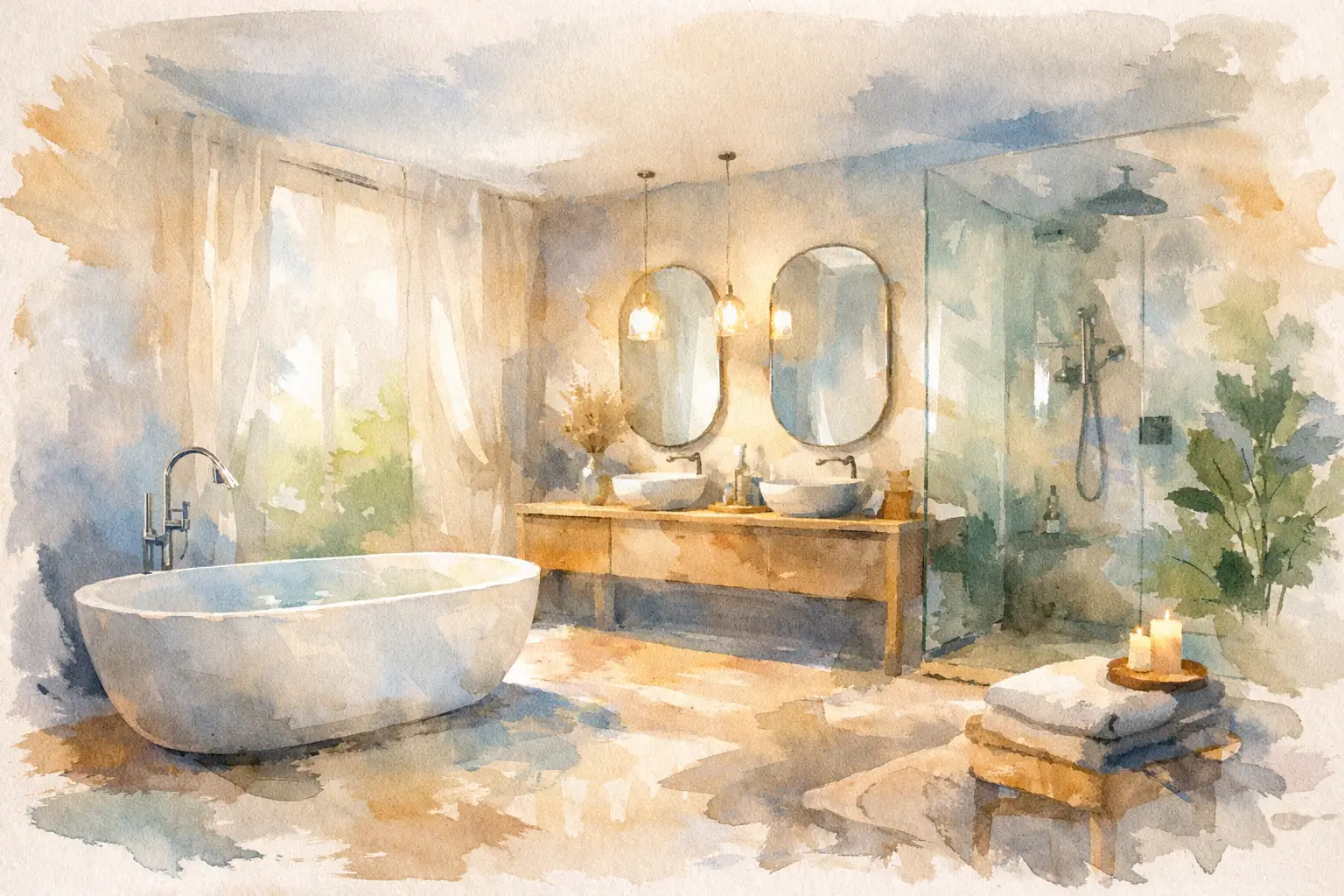
This is where trend and function meet. A beautiful bathroom in 2026 is expected to perform well. That might mean removing a bulky tub that never gets used, expanding a shower, or adjusting a linen closet to improve flow. It depends on the home, the square footage, and who uses the space every day.
Large walk-in showers remain a strong favorite, but the look is becoming quieter and more practical. Homeowners still want open, airy showers with glass enclosures, yet many are also asking for features that reduce maintenance and improve comfort.
That includes larger-format wall tile with fewer grout lines, recessed niches for storage, built-in benches when space allows, and better lighting inside the shower area. Linear drains are still popular, especially when they support a cleaner floor design. Frameless glass remains in demand, though some homeowners are choosing partial glass or slightly more defined enclosures to cut down on splashing and simplify cleaning.
There is also more interest in curbless or low-threshold entries. For some families, that is about a sleek look. For others, it is about long-term accessibility. A bathroom remodel can be a chance to plan ahead without making the room feel clinical.
Vanities in 2026 are doing more than holding a sink. They are becoming one of the most important storage and organization features in the room. Deep drawers, built-in dividers, pull-out storage, and better use of under-sink space are all becoming standard priorities.
Furniture-style vanities still have appeal, but many homeowners are choosing cleaner, more functional cabinetry over decorative legs and open space below. Floating vanities continue to be popular, especially in smaller bathrooms, because they can make the room feel more open. That said, they are not always the best choice if maximum storage is the main goal.
This is where good design decisions matter. A vanity should fit the room, support the routine, and leave enough clearance to move comfortably. The right size and layout can make a modest bathroom feel much more useful without increasing square footage.
Bad bathroom lighting is one of the most common frustrations in older homes. A single overhead fixture is rarely enough, and it often creates shadows right where you do not want them. In 2026, lighting is becoming a more intentional part of bathroom remodeling.
Layered lighting is the direction. That usually means a mix of vanity lighting, overhead general lighting, and in some cases accent lighting for niches, under-vanity glow, or shower areas. Backlit mirrors are also becoming more common because they provide a clean look and improve visibility.
The trend here is not about adding lighting for the sake of it. It is about making daily tasks easier and helping the room feel more comfortable at different times of day. Bright, even lighting for mornings and softer options for evenings can make the same bathroom feel far more livable.
Homeowners still want bathrooms with character, but many are being more careful about where they use bold patterns. Instead of covering every surface with a dramatic tile, 2026 is leaning toward a balanced approach.
You will see more textured neutrals, handmade-look tile, natural stone visuals, and subtle pattern variation. Statement tile is still part of the conversation, but often in smaller doses such as a shower niche, one feature wall, or a bathroom floor paired with simpler wall tile.
This is usually the smarter long-term move. Tile is one of the biggest visual commitments in a bathroom, and replacing it is not a quick update. If you love a bolder look, the safest approach is often to anchor the room with timeless main surfaces and add personality in places that do not overwhelm the space.
There is growing interest in spa-like bathrooms, but the 2026 version is less about luxury for luxury’s sake and more about everyday comfort. Heated floors, better ventilation, quieter exhaust fans, improved moisture control, and more comfortable shower experiences are getting attention for a reason. They make the room feel better to use.
That does not mean every remodel needs a long list of upgrades. It means homeowners are choosing features that solve real annoyances. If your floor is cold every winter, radiant heat may be worth it. If your mirror fogs constantly and moisture lingers, ventilation should move higher on the priority list.
Wellness can also show up in simpler ways, such as better natural light, less clutter, and a layout that feels calmer. Sometimes the most relaxing bathroom is the one that finally works properly.
Technology is still part of bathroom design trends 2026, but homeowners are being more selective. Touchless faucets, smart mirrors, integrated lighting controls, and bidet toilet features can all be worthwhile. The question is whether they improve the experience enough to justify the cost.
That is the right way to look at smart upgrades. Some become daily conveniences. Others feel impressive at first and then get ignored. If you are planning a remodel, focus on tech that supports comfort, cleanliness, or efficiency rather than features that may feel outdated in a few years.
The same goes for charging drawers, built-in speakers, or app-controlled settings. They can be useful, but they should fit your habits, not just the trend cycle.
The strongest trend for 2026 is not one finish or one color. It is intentionality. Homeowners are making choices based on how long they want the design to last, how the bathroom needs to function, and where it makes sense to spend versus save.
If you want a bathroom that ages well, start with the parts that are hardest to change later. Focus on layout, storage, tile, lighting, and ventilation first. Then build style through mirrors, hardware, paint, and accessories that are easier to update down the road.
That is often the difference between a remodel that still feels right years later and one that starts to feel tied to a very specific moment. A good bathroom should reflect your taste, but it should also support daily life without asking you to work around it.
For homeowners in the Louisville area, that practical mindset is usually what leads to the best remodeling decisions. Trends can be helpful, but the real goal is a bathroom that feels comfortable, organized, and built for the way your home actually works. If a design choice looks great but makes maintenance harder or storage worse, it may not be the right choice for your space. The best trend to follow is the one that makes your everyday routine easier.
Business Name: 3C Remodeling and Construction
Address: 1902 Campus Pl Suite 12, Louisville, KY 40299
Phone: 502-827-1361
Business Hours:
Mon - Fri: 08:00 AM to 05:00 PM
Sat-Sun: Closed
Referral program available