A bathroom can look dated and still work reasonably well. The harder problem is a bathroom that creates friction every day: a tub wall that is difficult to step over, a cramped shower with nowhere for toiletries, or a bathing setup that no longer fits a growing family. The custom shower vs tub shower decision is not just about the fixture. It affects how the room feels, how safely it functions, and whether the remodel supports the way your household actually lives.
For many Louisville-area homeowners, the right answer depends less on a design trend and more on practical questions. Who uses this bathroom? Is it the only tub in the house? Is this a long-term home? Can the existing layout be improved without expanding the room? Looking at those details early helps prevent a beautiful finished bathroom from becoming an expensive compromise.
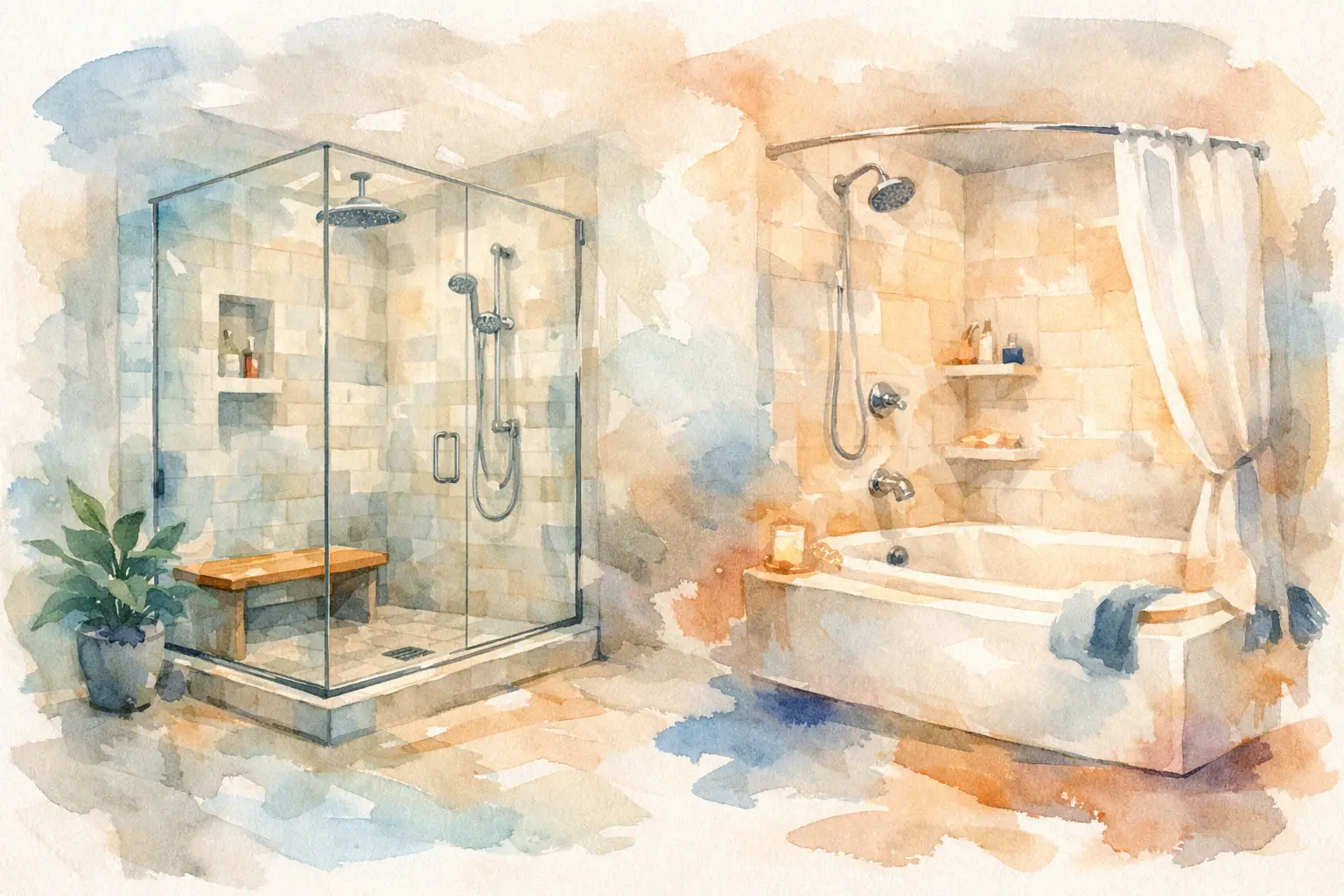
Before comparing tile, glass, or showerheads, consider what happens in the bathroom on an ordinary weekday morning. A custom shower often makes sense for adults who shower daily and want a more comfortable, open experience. It can offer a larger footprint, built-in storage niches, a bench, multiple showering options, and easier entry than a traditional tub-and-shower combination.
A tub shower remains a practical choice when the room needs to serve several purposes. Families with young children may use a bathtub regularly. Pet owners often appreciate a dedicated place to bathe a dog. A tub can also be the simplest way to preserve bathing flexibility in a secondary bathroom without giving up shower function.
A custom shower is usually the stronger choice when the existing tub is rarely used and the homeowner wants to make better use of limited square footage. Removing a bulky tub can create space for a wider shower, more usable wall area, or a more comfortable path through the room.
Customization matters because no two households use a bathroom exactly the same way. A taller homeowner may need a higher showerhead. Someone who prefers a slower, more relaxing morning routine may value a bench. A family that shares one bathroom may need recessed niches and well-planned storage so bottles do not collect along the tub edge. These details are small on paper but meaningful every day.
Keeping or installing a tub shower is not settling for less. In the right bathroom, it is the most practical choice. If this is the only full bathroom in the home, retaining a tub can provide flexibility for children, guests, and future buyers. A well-designed tub shower can still feel updated with a durable surround or tile, quality fixtures, better lighting, and storage that keeps the room organized.
A tub shower can also be a smart move when the current layout is tight. Reworking plumbing, framing, and surrounding walls to create a larger shower may be worthwhile, but it should solve a real problem. If the existing tub footprint works well and the bigger need is fresh finishes or more storage, a thoughtfully planned tub shower remodel may deliver better value.
The room’s dimensions often guide the decision. A standard alcove tub typically occupies a familiar three-wall footprint, while a custom shower can be designed around the available space. That does not always mean a shower is smaller or cheaper. Depending on the layout, a walk-in shower may require moving plumbing, changing walls, or adding glass enclosures.
The opportunity comes from looking at the entire room rather than treating the bathing area as a separate box. In older homes around Louisville, bathrooms can have awkward door swings, narrow clearances, and vanities that crowd the room. Removing a tub may open up options for a larger vanity, a linen cabinet, or a shower entrance that is easier to use.
A good layout also considers what happens outside the shower. There should be enough room to dry off, open the door safely, access drawers, and move through the bathroom without bumping into fixtures. Clearances may sound like a technical detail, but they are what make a remodeled space feel calm instead of cramped.
It is tempting to assume a tub shower is always the budget-friendly option and a custom shower is always the premium option. Often that is true, but the final cost depends on the scope behind the walls.
A custom shower can involve demolition, plumbing adjustments, waterproofing, tile installation, a shower pan, glass, fixtures, and possible changes to electrical or ventilation. Features such as a frameless glass enclosure, bench, linear drain, large-format tile, or multiple showerheads can add to the project. The quality of waterproofing should never be treated as an optional upgrade. A beautiful tile shower only performs well when the system beneath it is installed correctly.
A tub shower may have a more predictable footprint, especially when plumbing remains in place. Still, costs can rise if the project uncovers water damage, outdated plumbing, insufficient ventilation, or wall and floor issues. A low initial price does not help if the plan overlooks the work needed to make the bathroom durable.
The most useful estimate is one that clearly explains what is included: demolition, preparation, plumbing, waterproofing, materials, installation, and finish work. That level of clarity helps homeowners compare options based on the full project, not just the visible fixture.
A bathroom remodel is a chance to plan ahead without making the space feel clinical. A curbless or low-threshold custom shower can make entry easier for people with limited mobility, knee pain, or balance concerns. A built-in bench, handheld showerhead, properly placed grab bars, and slip-resistant flooring can support safer use while still fitting a polished design.
A tub shower requires stepping over a higher edge, which can become more difficult over time. That does not make it wrong for every household, but it should be an honest part of the decision. If you are remodeling a primary bathroom where you expect to live for many years, accessibility deserves more weight than a passing style preference.
For homeowners who want to retain a tub for family use, a common solution is to create a comfortable custom shower in the primary bathroom while keeping a tub shower in a hall or secondary bathroom. This approach preserves flexibility without asking one room to do everything.
Resale value matters, but it should not force you to keep a tub you never use in your own primary bathroom. Buyers often appreciate a well-designed walk-in shower, especially when it makes a primary suite feel more functional and current. What can raise concerns is a home with no bathtub at all, particularly for buyers with young children.
The practical middle ground is simple: if possible, keep at least one bathtub somewhere in the house. If your home already has another usable tub, converting an unused primary bath tub into a custom shower is often a reasonable choice. If this is the only full bathroom, think carefully before removing the only option for bathing children or guests.
Quality also influences resale. A clean, durable bathroom with a logical layout and dependable finishes generally makes a stronger impression than a trend-heavy space that feels poorly planned. Choose materials and features you will enjoy, but make sure the room remains easy to use and maintain.
The best choice becomes clearer when you look at the bathroom as a complete project. Measure the room, identify what is not working, and decide which needs are essential. You may want more shower space, but you may also need vanity storage, better lighting, a quieter exhaust fan, or a door that no longer blocks the room.
It also helps to separate needs from wants. A safe entry, effective waterproofing, functional storage, and a layout that fits your household are needs. A rainfall showerhead, decorative tile, or oversized glass panel may be worthwhile wants, but they should come after the core plan is sound.
A family-owned remodeling partner can help you see options that are easy to miss when you only focus on the tub or shower. 3C Remodeling and Construction works with homeowners to shape bathroom layouts around daily routines, realistic budgets, and long-term comfort.
The right bathroom should make the start and end of your day easier. Whether that means a roomy custom shower or a dependable tub shower, choose the option that gives your home more comfort, better function, and fewer daily compromises.
Business Name: 3C Remodeling and Construction
Address: 1902 Campus Pl Suite 12, Louisville, KY 40299
Phone: 502-827-1361
Business Hours:
Mon - Fri: 08:00 AM to 05:00 PM
Sat-Sun: Closed
Referral program available