
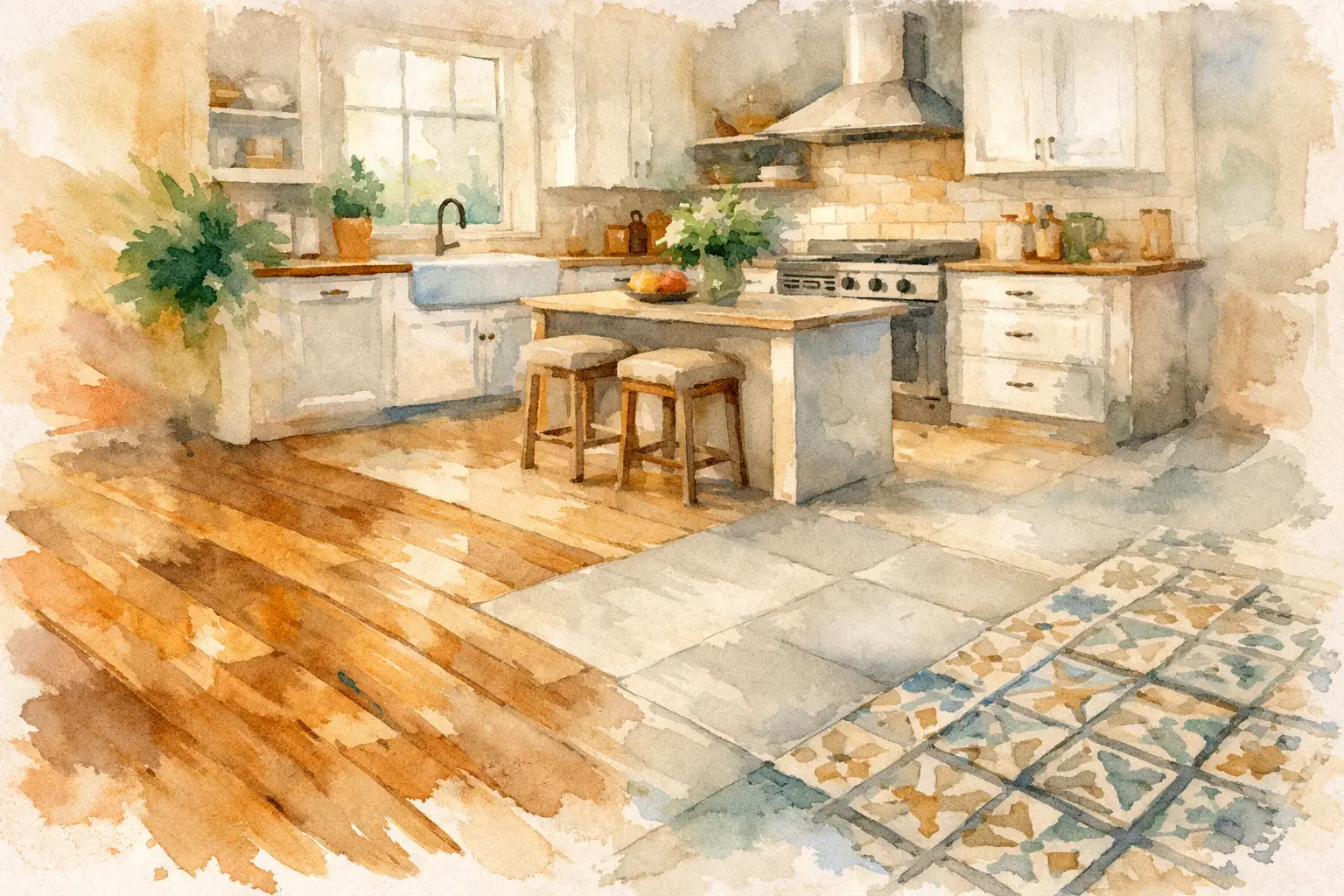
The floor usually gets less attention than cabinets and countertops, right up until real life starts happening on it. Spilled coffee, dropped pans, wet shoes, pet traffic, and the constant stop-and-go of family routines can make a beautiful floor look like the wrong choice fast. If you are trying to choose the best flooring for kitchen remodel plans, the right answer is rarely the trendiest material. It is the one that fits how your household actually uses the space.
A kitchen floor has to do several jobs at once. It needs to handle moisture, hold up to heavy traffic, work with the style of the home, and feel good enough underfoot that you do not regret standing on it while making dinner. Budget matters too, but so does the bigger picture. Flooring is tied to layout, cabinet height, transitions into nearby rooms, and the overall feel of the remodel.
Homeowners often come in looking for one perfect material, but kitchen flooring is usually about trade-offs. Some options are tougher than they look. Some look great on day one and become harder to live with over time. The best choice depends on your priorities.
If you have a busy family kitchen, durability and easy cleanup may matter more than having a high-end natural material. If your remodel includes opening the kitchen to a dining or living area, continuity with nearby flooring may be just as important as water resistance. If you spend a lot of time cooking, comfort underfoot should be part of the conversation.
That is why flooring should not be chosen in isolation. In a well-planned remodel, it works with the cabinet layout, appliance placement, lighting, and traffic flow instead of competing with them.
For a lot of households, luxury vinyl plank, often called LVP, is the strongest all-around option. It handles moisture well, stands up to everyday wear, and gives homeowners a wide range of looks from warm wood tones to more contemporary finishes. It is also generally easier on the budget than tile or hardwood.
Another reason LVP works well in kitchens is comfort. It has a little more give underfoot than tile, which can make a noticeable difference if you cook often or spend long stretches cleaning up after meals. It is also quieter, which matters in open-concept homes where sound travels.
That said, not all vinyl flooring is created equal. Lower-quality products can look repetitive or feel thin, and poor installation can lead to gaps, shifting, or uneven wear. If you want this option to perform well, product quality and subfloor preparation matter just as much as the material itself.
Porcelain or ceramic tile remains a classic kitchen flooring choice for good reason. It is highly resistant to moisture, very durable, and available in a wide range of styles. If your priority is long-term toughness and a clean, polished look, tile deserves serious consideration.
It also works especially well in kitchens where spills are common and where homeowners want a surface that is easy to wipe down. In homes with radiant floor heat, tile can become much more comfortable year-round.
The downside is that tile is hard. That sounds obvious, but it matters in daily use. Standing on a hard floor for extended periods can be tiring, and dropped dishes are less likely to survive. Grout lines also need attention. Even with good materials and installation, grout can collect dirt and may require more maintenance than homeowners expect.
Tile can be an excellent fit, but it tends to work best for homeowners who value durability and appearance over softness underfoot.
Many people love the look of hardwood in a kitchen, and it is easy to see why. It adds warmth, character, and a more seamless connection to the rest of the home, especially if your first floor already has wood flooring in nearby rooms. In remodels where visual continuity matters, hardwood can make the entire space feel more unified.
The challenge is moisture. Kitchens are not bathrooms, but they still deal with spills, leaks, and routine messes. Hardwood can work in kitchens if it is properly selected, finished, and maintained, but it does require more care than tile or vinyl. Standing water is a problem, and scratches or dents are more likely over time.
For some homeowners, that is worth it. A lived-in wood floor can age beautifully. For others, especially families with young kids, pets, or a very busy kitchen, the maintenance trade-off may not feel worthwhile.
Laminate flooring has come a long way in appearance, and it can be an affordable option for homeowners who want the look of wood without the cost of real hardwood. It resists scratches fairly well and can be a good fit in some parts of the home.
In kitchens, though, moisture remains the big question. Some newer laminate products offer better water resistance than older versions, but they are still not the first material most remodelers recommend for a hard-working kitchen. Once water gets into the seams or edges, damage can become difficult to reverse.
If your kitchen sees light use and your budget is tight, laminate might be part of the discussion. But if you are already investing in a larger remodel, many homeowners find that stepping up to a better-performing material is the smarter long-term choice.
Stone flooring can create a beautiful kitchen, especially in higher-end remodels where the goal is a timeless, substantial look. Materials like slate, travertine, or limestone have real character and can make a kitchen feel distinctive in a way manufactured materials often do not.
But stone comes with responsibilities. It is usually more expensive, heavier, and more demanding to maintain. Some types need sealing, and many are hard underfoot like tile. Variation in color and texture is part of the appeal, but it also means the final look is less uniform.
For the right home, stone can be a strong choice. It is just not the most practical answer for every kitchen.
The material itself is only part of the decision. The better question is how you want the kitchen to perform after the remodel is done.
If your kitchen is the center of family life, easy maintenance may lead the list. If you are opening walls and creating better flow into adjoining spaces, flooring transitions may influence the final choice. If one person in the household does most of the cooking, comfort may matter more than expected. And if resale is part of the plan, broad appeal and durability usually matter more than niche design trends.
This is where experienced remodeling guidance helps. A flooring choice that looks right on a sample board may not be the best fit once you factor in cabinet layout, sunlight, existing floor height, appliances, and how the kitchen connects to the rest of the home.
Before settling on a material, think about what your current kitchen floor gets wrong. Is it hard to clean? Does it show every speck of dirt? Is it slippery when wet? Does it feel cold and unforgiving? Those answers usually point you toward a better option.
It also helps to ask how long you plan to stay in the home. If this is your long-term kitchen, comfort and everyday usability deserve more weight. If you may sell in a few years, it makes sense to focus on durable finishes with broad appeal.
Finally, think beyond the floor itself. The best kitchen remodels are not built around one product. They are built around better daily living. At 3C Remodeling and Construction, that often means helping homeowners weigh flooring alongside storage, layout, traffic flow, and finishes so the space works as well as it looks.
If you want the most balanced choice for a typical busy household, luxury vinyl plank is often the safest recommendation. It offers strong performance, good style flexibility, and comfort that many families appreciate. If your top priority is long-term durability and you do not mind a firmer surface, porcelain tile is a close contender. If your goal is warmth and continuity with the rest of the home, hardwood may still be the right answer as long as you are comfortable with the maintenance.
There is no one-size-fits-all winner, and that is not a bad thing. A kitchen remodel should reflect the way you live, not just what is popular right now. The right floor is the one that still makes sense after the boxes are unpacked, the meals are cooked, and the space starts doing its real job every day.
Business Name: 3C Remodeling and Construction
Address: Louisville, KY 40299
Phone: 502-827-1361
Business Hours:
Mon - Fri: 08:00 AM to 05:00 PM
Sat-Sun: Closed
Referral program available