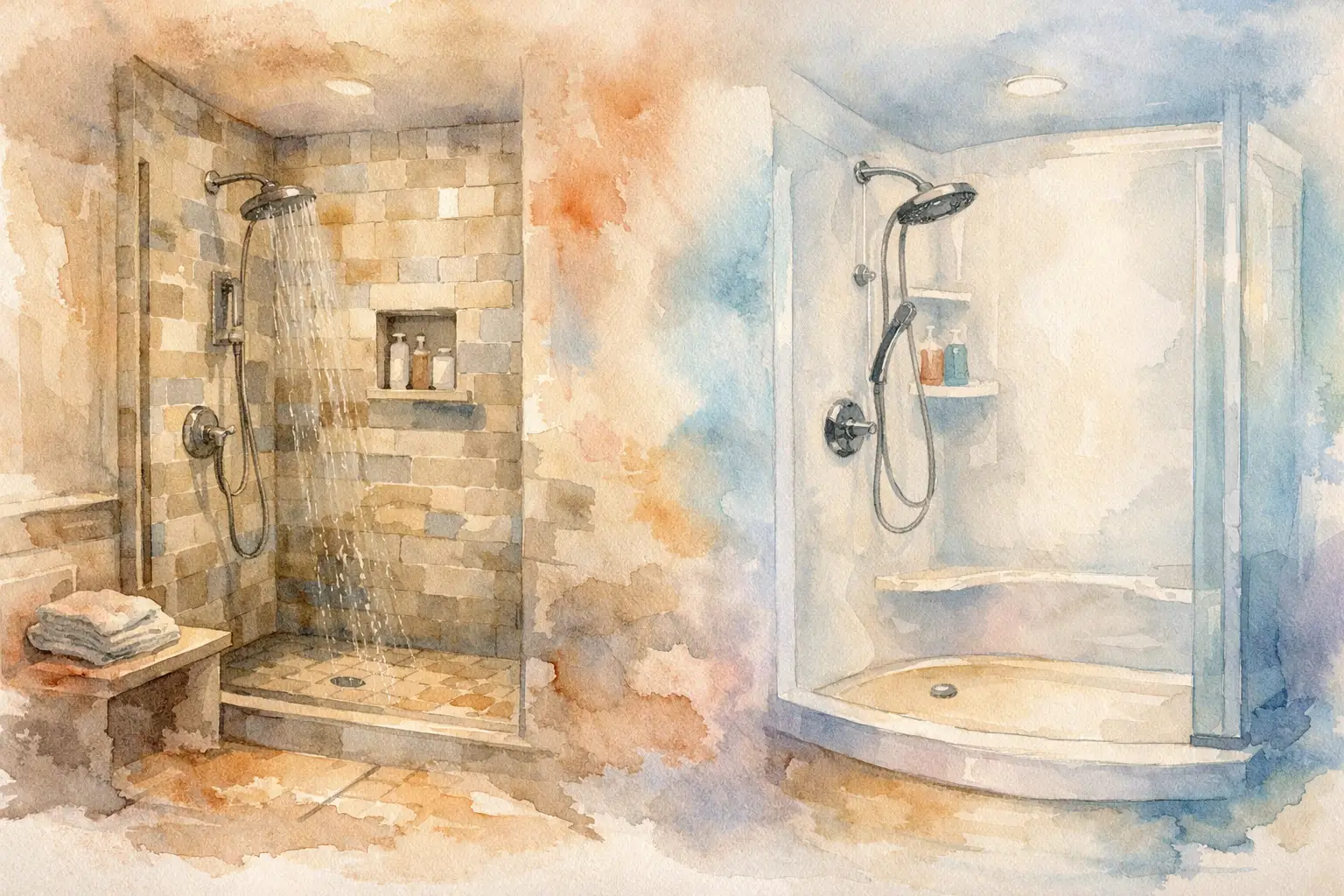
A shower can look great in a showroom and still be wrong for the way your household lives. When weighing a tile shower vs acrylic surround, the better choice comes down to more than the initial price. Think about who uses the bathroom, how much cleaning you want to take on, whether the layout needs to change, and how long you plan to stay in the home.
For some Louisville-area homeowners, a low-maintenance surround is the practical answer to an aging tub or a guest bathroom that needs a dependable update. For others, a custom tile shower is worth the investment because it improves access, solves an awkward layout, and creates a more finished primary bathroom. Both can be excellent choices when they are planned and installed correctly.
Acrylic surrounds are smooth wall panels made for wet areas. They are commonly installed around a tub or shower base, with panels that cover the walls and limit the number of seams. A tile shower uses individual tiles installed over a properly prepared, waterproofed wall system. It can include a tiled floor, a prefabricated shower pan, or a combination of both.
The biggest practical difference is cleaning. Acrylic has a nonporous surface with few grout lines, so it is generally easier to wipe down. That matters in a busy hall bath, a children’s bathroom, or a rental property where simple upkeep is a priority. Use a nonabrasive cleaner and soft cloth, and avoid harsh products that can dull the finish over time.
Tile requires more attention, especially if the shower floor is tiled. Grout lines can collect soap residue and mineral buildup, and they need routine cleaning to stay looking their best. Quality grout and proper sealing can reduce maintenance, but they do not make grout disappear. Homeowners who enjoy the character and customization of tile often find that trade-off worthwhile. Those who want the fastest possible cleanup may not.
Tile offers far more freedom. It can be used to create a walk-in shower with a bench, recessed storage niches, a decorative accent wall, large-format wall tile, or a floor pattern that fits the rest of the bathroom. It also allows a remodeling team to better tailor the shower to an unusual room shape or a redesigned layout.
That flexibility can make a real difference in an older home. A tight shower, a poorly placed door, or a bathroom with no useful storage often needs more than a surface replacement. A custom tile shower can be part of a larger plan that improves circulation, adds a niche for everyday products, and makes the room feel more intentional.
Acrylic surrounds have come a long way from the basic white panels many homeowners remember. They are available in a range of colors, finishes, and patterns, including options designed to resemble stone or tile. Still, they have a more streamlined, uniform appearance. If you want a clean, classic bath without making the shower the visual focal point, that can be a benefit rather than a drawback.
Pay attention to the product itself. Acrylic is generally thicker and more durable than inexpensive fiberglass, though materials and installation systems vary. A good-quality surround paired with a properly fitted base can look polished and serve a household well for years. The key is choosing a solution suited to the project, not simply selecting the least expensive panel on the shelf.
An acrylic surround usually has a lower upfront cost than a custom tile shower. The materials are less labor-intensive to install, and the project may move more quickly when the existing tub or shower footprint remains unchanged. That makes acrylic a strong option for homeowners who need a noticeable bathroom improvement while keeping the scope focused.
Tile involves more steps and more skilled labor. The old shower must be removed, the framing checked, the substrate prepared, and the waterproofing completed before tile installation begins. Tile setting, grout work, trim details, and a custom floor or glass enclosure can add to the investment.
However, comparing only the visible surface can be misleading. If there is water damage, outdated plumbing, poor ventilation, or an inefficient layout, either option may require work behind the walls. Replacing a shower is the right time to identify and correct those issues instead of covering them up.
A clear estimate should separate the shower material choice from related work such as plumbing changes, new fixtures, flooring, lighting, ventilation, and glass. That helps you understand whether the cost difference comes from tile itself or from a broader bathroom renovation that will improve how the room functions.
A tile shower is only as dependable as the waterproofing system underneath it. Tile and grout are finishes, not the waterproof barrier. The wall system, shower pan, drain connection, corners, and niches all need to be handled carefully to keep water where it belongs.
This is one reason a professional installation matters. A shower can appear finished on day one but develop costly problems later if water reaches the framing or subfloor. Experienced remodeling work focuses on the details that homeowners cannot see after installation, including proper substrate preparation, drainage, and transitions around fixtures.
Acrylic surrounds also need careful installation. Panels must be installed on sound, properly prepared walls, and every seam, edge, and fixture opening needs appropriate sealing. The lower number of joints can reduce maintenance concerns, but it does not excuse rushed preparation. In either system, the quality of the work behind the finished surface protects your investment.
Tile can last for decades and offers an advantage when a small area is damaged. A cracked or stained tile can often be replaced without redoing the entire shower, assuming matching material is available. Grout may eventually need repair or refreshing, particularly in heavily used showers.
Acrylic is durable in normal household use but can scratch, crack, or discolor if it is abused or cleaned with the wrong products. Small surface damage may be repairable, but a major crack or a panel that no longer matches may require a more involved replacement. Choosing a quality product and following its care guidance helps extend its lifespan.
For resale, a well-designed tile shower often carries more visual appeal in a primary bathroom. Buyers tend to notice custom features, updated fixtures, and a shower that feels spacious and thoughtfully built. That does not mean tile is automatically the best financial choice. A clean, updated acrylic surround can be the smarter move in a secondary bathroom, a modestly priced home, or a project where other improvements need the budget.
If you are planning to stay in your home for years, consider how the shower will feel to use every day. A low-threshold or curbless tile shower can support easier entry, while a bench, handheld showerhead, and well-placed grab bars can improve comfort for people of many ages. These features need to be planned early because framing, waterproofing, and layout all affect what is possible.
An acrylic system can also support an accessible design, particularly when paired with a low-entry shower base. It may be a good fit when speed, ease of cleaning, and a straightforward replacement are the main goals. The right answer depends on the available space and the level of customization you need.
Choose an acrylic surround when you want a practical, lower-maintenance shower with a controlled budget and a clean, consistent look. It is especially effective when the existing layout works and the priority is replacing worn or difficult-to-clean surfaces.
Choose tile when the bathroom needs a custom layout, a walk-in design, more storage, or a finish that ties into a larger renovation. It is also the stronger choice when you want the shower to become a lasting centerpiece of the room and are comfortable investing in the labor and maintenance that quality tile requires.
A bathroom remodel should make mornings easier, not add another high-maintenance feature to your home. Before choosing a material, look beyond the sample board and picture the room on an ordinary weekday: the cleanup, the storage, the entry, and the people who use it. A thoughtful plan from a local remodeling partner such as 3C Remodeling and Construction can help turn those everyday details into a shower that feels right for your home.
Business Name: 3C Remodeling and Construction
Address: 2185 Watterson Trail, Louisville, KY 40299
Phone: 502-827-1361
Business Hours:
Mon - Fri: 08:00 AM to 05:00 PM
Sat-Sun: Closed
Referral program available