
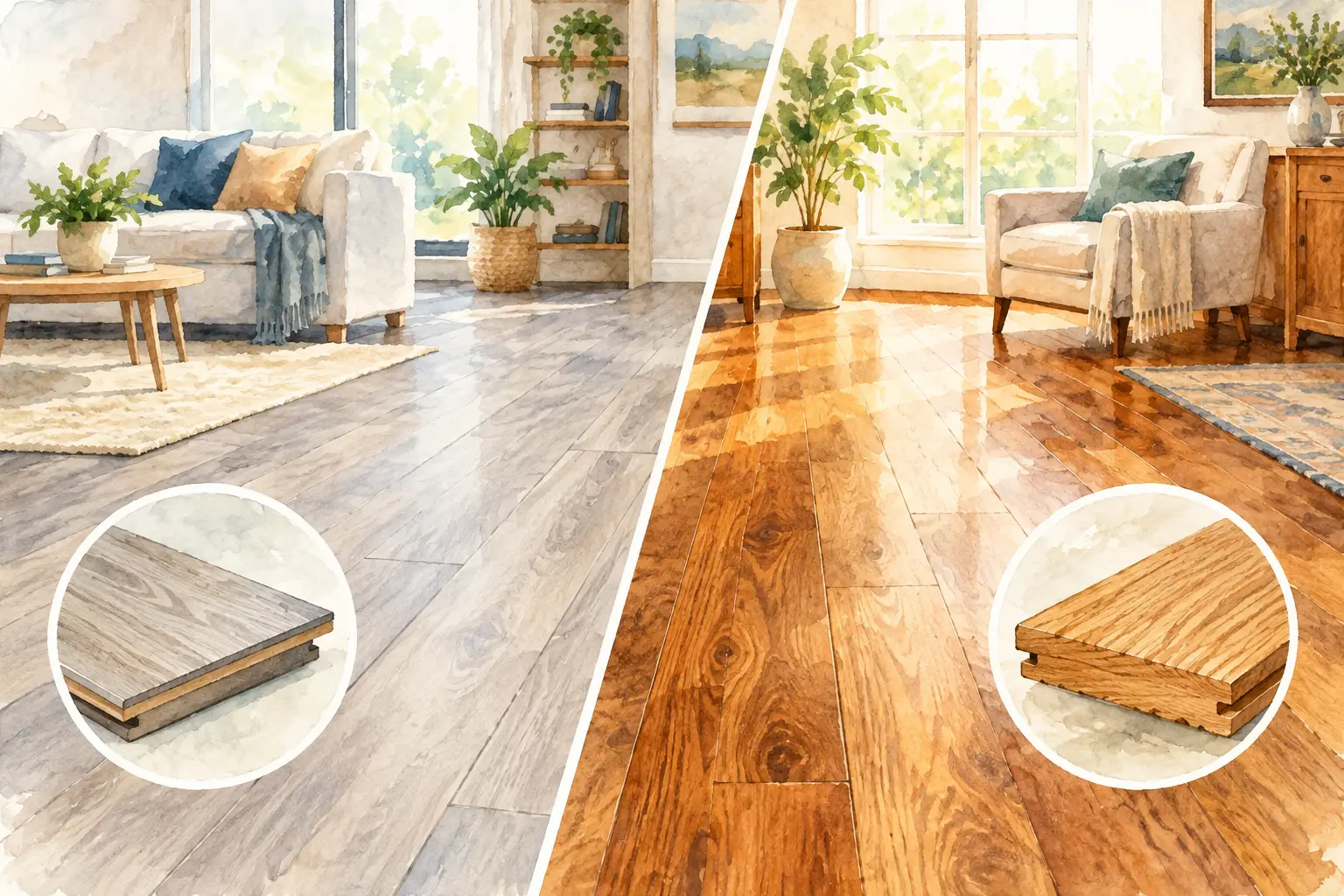
A new floor changes more than the appearance of a room. It affects how easily your kitchen cleans up after dinner, how a busy hallway holds up to shoes and pets, and how connected a remodel feels from one space to the next. When homeowners weigh laminate versus hardwood flooring, the better choice is rarely about which material is universally best. It is about how your household lives, what the room needs to handle, and what you want from the investment over time.
For a kitchen, bathroom-adjacent space, main-level renovation, or whole-home update, flooring should be considered early. Cabinet colors, wall changes, transitions between rooms, and subfloor conditions all influence the final result. A thoughtful decision now can help prevent a beautiful remodel from becoming difficult to maintain later.
Hardwood flooring is made from real wood. Traditional solid hardwood uses planks milled from a single piece of wood, while engineered hardwood has a real hardwood top layer over a layered core. Both provide the natural grain, variation, and character homeowners associate with wood floors.
Laminate flooring is a manufactured product built in layers. Its decorative surface is a high-resolution image designed to resemble wood, protected by a durable wear layer. Quality laminate can look surprisingly convincing from across a room, especially when it has realistic texture and varied plank patterns. It is not real wood, though, and it will not age, refinish, or respond exactly like wood.
That distinction matters most when you look beyond the first day of installation. Hardwood develops a lived-in patina and can often be renewed. Laminate is designed for practical performance and a consistent appearance, but replacement is usually the answer once the surface is significantly damaged or worn.
The right floor for a quiet formal dining room may not be the right floor for a kitchen where children, pets, and daily traffic put every surface to work. Before choosing a color or plank width, consider the routines that happen in the room.
Laminate is often appealing for households that want the warmth of a wood-look floor with a lower upfront cost. Its protective top layer stands up well to routine scratches, scuffs, and active foot traffic. That can make it a sensible option for hallways, living rooms, bedrooms, and finished basements where the subfloor and moisture conditions are appropriate.
It can also be a good choice when a remodel budget needs to cover several priorities at once. If you are updating cabinets, counters, lighting, and flooring, laminate may free up room in the budget for the layout improvements or storage solutions that will make the kitchen function better every day.
Still, laminate is not automatically waterproof. Some products are water-resistant for a limited period, while others can swell at the seams or edges when spills sit too long. Read the product specifications carefully, and choose a material rated for the conditions in the room rather than relying on the label alone.
Hardwood is a strong fit for homeowners who value authentic materials, long-term flexibility, and a floor with visual depth. Each board has natural variation, so the floor does not look printed or repetitive. It can work beautifully in living areas, dining rooms, bedrooms, and open main floors where the goal is a lasting, cohesive look.
One of hardwood’s biggest advantages is repairability. Minor scratches can blend into the natural character of a wood floor, and many hardwood floors can be sanded and refinished when the finish becomes worn. That gives hardwood a much longer potential lifespan than laminate, provided it is installed and maintained correctly.
Hardwood does require realistic expectations. It can dent from dropped objects, scratch under furniture, and react to changes in humidity. In the Louisville area, seasonal shifts can cause wood to expand and contract. Proper acclimation, correct installation, and appropriate humidity control help protect the floor and reduce unwanted gaps or movement.
Laminate generally costs less than hardwood, both for materials and installation. It is often installed as a floating floor, which can reduce labor time when the existing floor and subfloor are in suitable condition. For homeowners focused on immediate budget control, that difference can be meaningful.
Hardwood typically costs more because the material, preparation, and installation are more involved. Solid hardwood may need to be nailed or glued down, and unfinished hardwood may require sanding and finishing after installation. Engineered hardwood offers more installation flexibility, but price still varies widely based on species, plank thickness, finish, and construction quality.
The lowest quote is not always the lowest project cost. A floor may require subfloor repairs, leveling, removal of old materials, new baseboards, door adjustments, or transitions into adjoining rooms. Those details affect both appearance and performance. A professional flooring plan should account for them before work begins, not after the room is already torn apart.
Water is where the laminate versus hardwood flooring decision becomes more specific. Neither standard laminate nor traditional solid hardwood is the ideal choice for every wet area.
For a kitchen, quick cleanup matters. Hardwood can be used successfully when spills are addressed promptly and the floor is protected from standing water. It adds warmth and continuity to an open-concept renovation, particularly when the kitchen flows into a living room or dining area. However, a leaking dishwasher, pet water bowl, or repeated wet shoes near an exterior door can create problems if moisture is ignored.
Laminate may offer better short-term resistance to surface moisture, depending on the product, but water that reaches seams or the core can cause permanent swelling. For bathrooms, laundry rooms, or areas with a higher risk of repeated water exposure, a different flooring material may be the more dependable choice. Good remodeling advice should include recognizing when neither of the two leading options is the best fit.
Hardwood remains a familiar selling point because buyers recognize it as a premium, durable material. It has a natural warmth that works with traditional homes, updated interiors, and many styles in between. If resale value is a key priority and the home supports the investment, hardwood can be a compelling choice.
Laminate has improved dramatically in appearance, but it still does not offer the same depth or authenticity under close inspection. That does not make it a poor choice. A well-selected laminate floor, installed cleanly with thoughtful transitions and trim, can make a home look polished and well cared for. It simply serves a different purpose.
Comfort is also personal. Hardwood feels solid underfoot and can be refinished to suit changing tastes. Laminate can feel slightly firmer or sound more hollow when installed over certain underlayments, although proper preparation and quality materials make a noticeable difference. Samples should be viewed in the actual room, under your home’s natural and artificial light, before you commit.
Both options benefit from simple habits: use mats at exterior doors, add felt pads beneath furniture, sweep grit regularly, and clean spills quickly. Avoid soaking either material with water or using harsh cleaners that leave residue.
Hardwood needs a cleaner made for its finish and occasional attention to scratches or worn areas. Laminate should be cleaned with a lightly damp microfiber mop and a product approved by its manufacturer. Steam mops are generally a poor choice for both, since excess moisture and heat can damage finishes, seams, or adhesives.
If your household includes large dogs, young children, or frequent entertaining, do not assume one material will eliminate all wear. The best result comes from selecting a finish, color, and texture that are forgiving. Mid-tone colors and visible grain often hide everyday dust and small marks better than very dark, very light, or high-gloss floors.
Small surface marks may be less noticeable with a repair product, but damaged boards are usually replaced rather than refinished. Keeping a few extra planks from the same production run is a smart precaution.
Yes, many homeowners choose it for kitchens, especially in open floor plans. The key is prompt spill cleanup, stable indoor humidity, and a plan for protecting areas near sinks, dishwashers, and exterior doors.
No. Engineered hardwood has a real wood veneer on top, while laminate has a printed decorative layer. Engineered hardwood can sometimes be refinished, depending on the thickness of its wood layer.
A floor should support the way your family uses the home, not ask your family to live around it. Whether you choose durable laminate for a practical refresh or hardwood for long-term character, taking the time to match the material to the room can make the entire renovation feel more comfortable, functional, and lasting. A local remodeling partner such as 3C Remodeling and Construction can help you consider the full picture before installation begins.
Business Name: 3C Remodeling and Construction
Address: 1902 Campus Pl Suite 12, Louisville, KY 40299
Phone: 502-827-1361
Business Hours:
Mon - Fri: 08:00 AM to 05:00 PM
Sat-Sun: Closed
Referral program available