That basement with the low light, dated paneling, worn flooring, and no clear purpose does not usually fix itself with a new coat of paint. If you are wondering how to update an outdated basement, the real answer starts with how you want the space to work for your household. A better basement is not just newer looking. It should feel more comfortable, more useful, and easier to live with every day.
For some homeowners, that means creating a family room where kids can spread out without taking over the main level. For others, it means adding a guest area, a home office, better storage, or a flexible space that can handle several needs at once. The right update depends on your home, your budget, and what is currently making the basement feel tired or underused.
An outdated basement is rarely just about one finish being old. Usually, it is a combination of problems that build on each other. Dark ceilings make the room feel closed in. Old carpet can hold odors and moisture. Wood paneling or heavy trim can make the space feel stuck in another decade. Poor lighting leaves corners unusable. In many homes, the biggest issue is not style at all. It is that the layout never gave the basement a real job.
Before choosing colors or materials, take a step back and look at what is not working. Is the room too dark to enjoy? Does it feel damp? Are there awkward areas around posts, utility lines, or stairs? Is there enough storage, or is the basement acting as a catch-all for everything that has nowhere else to go? Answering those questions first helps you avoid cosmetic updates that still leave the space frustrating to use.
The smartest basement remodels usually begin with the parts you do not always notice at first. If the basement has moisture issues, musty smells, poor insulation, or older finishes that have seen better days, those conditions should be addressed before any design work moves forward. A finished room will never feel right if the foundation underneath it is being ignored.
Once the basics are handled, focus on the changes that improve both appearance and function. Flooring, wall finishes, lighting, and ceiling treatments have the biggest visual impact. But layout matters just as much. A basement that finally has defined zones for relaxing, working, storing, or hosting will feel updated even before the decorative details go in.
There is also a budget conversation worth having early. Some homeowners want a full transformation with custom built-ins, a bathroom, or a reworked floor plan. Others are trying to make the basement cleaner, brighter, and more usable without expanding the project too far. Both can be good decisions. The key is knowing where your investment will make daily life better, not just where it will photograph well.
A lot of older basements were finished around whatever mechanical systems or structural elements were already there, with very little thought given to flow. That is why some basements feel like a maze of chopped-up rooms, while others are one large open area with no sense of purpose.
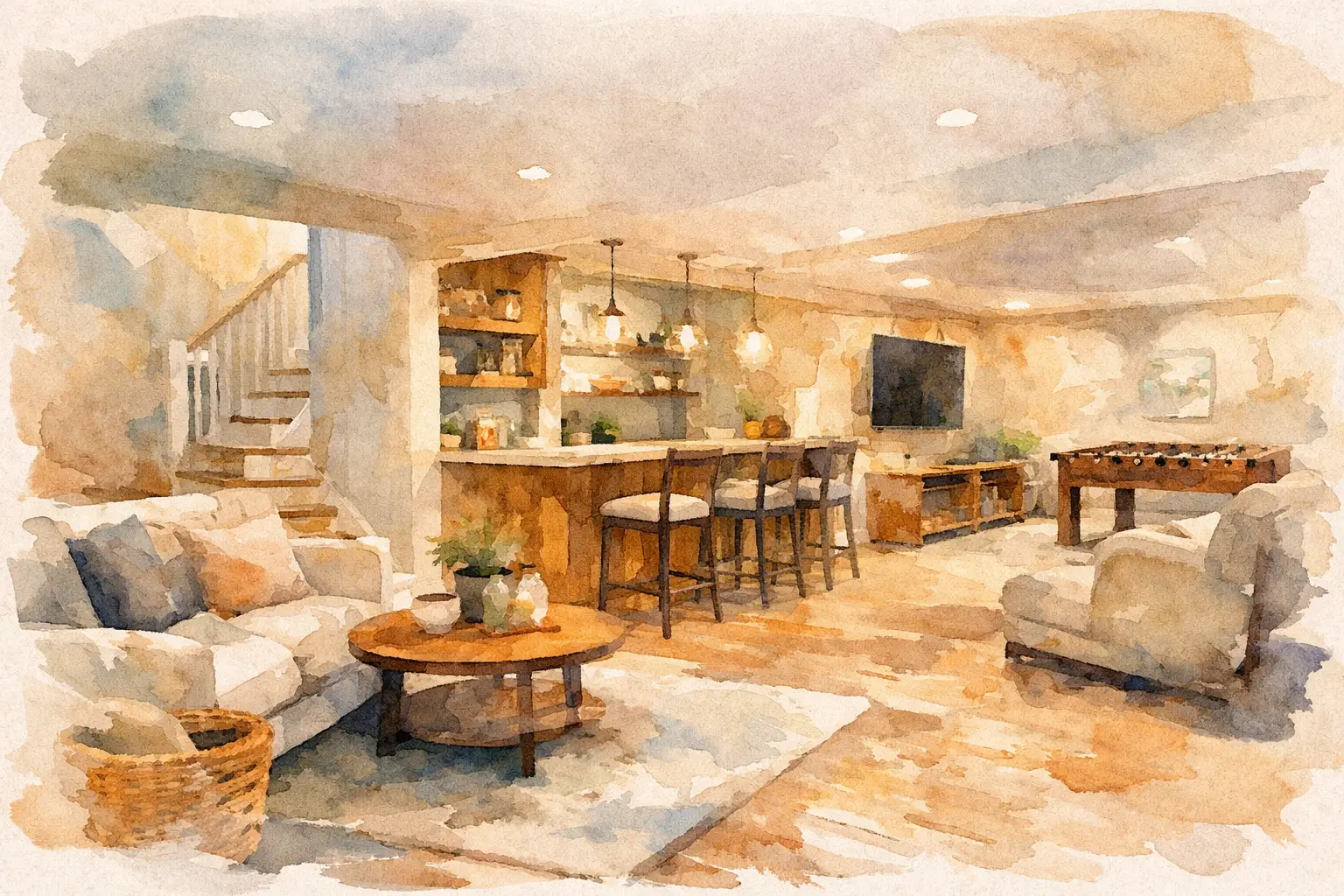
A better layout often means creating zones instead of trying to force the basement into one single use. You might have a TV area at one end, a homework or office nook near better light, and closed storage tucked under the stairs or along one wall. If guests stay over, a more private section can make sense. If your family needs overflow space, open sight lines may matter more than separate rooms.
This is one of the biggest places where professional planning helps. Good basement remodeling is about more than making things pretty. It is about reworking the space so traffic flow, storage, furniture placement, and lighting all support the way you actually use the room.
Basements often struggle because they rely on too little natural light. That does not mean the room has to feel dim. Lighter wall colors, brighter trim, and thoughtfully placed lighting can make a major difference.
Recessed lights are a common choice because they help keep ceilings feeling as open as possible. Wall sconces or floor lamps can soften the room and reduce that harsh, overly bright look that some basements get when all the lighting comes from one source. If the basement includes different zones, separate switches help each area feel intentional.
Color matters too. Soft whites, warm greiges, light taupes, and muted earth tones tend to work well because they reflect light without making the basement feel cold. Very dark colors can look dramatic, but they also tend to emphasize limited light and lower ceilings. It depends on the size of the room and how much lighting support you can build in.
Basement materials need to do more than look good. They should also make sense for below-grade conditions and busy households. That is especially true in homes where the basement doubles as family space, storage, entertaining space, or a place where pets and kids spend time.
Flooring is a major decision. Old basement carpet often makes the room feel dated fast, especially if it has absorbed years of wear. Many homeowners now prefer hard-surface flooring that is easier to clean and better suited for basement conditions. The right option depends on the level of moisture exposure, the amount of traffic, and whether warmth underfoot is a priority.
Wall and ceiling treatments matter just as much. Drywall usually creates a cleaner, more finished look than older paneling. Ceiling updates can be trickier because basements often need access to utilities. In some cases, a drywall ceiling works well. In others, a more accessible ceiling system is the more practical choice. The best answer depends on how often access may be needed and how important a polished finished look is in that part of the home.
One of the fastest ways for a remodeled basement to slip back into looking outdated is clutter. If the space does not have enough built-in storage or a clear place for seasonal items, toys, workout gear, blankets, and household overflow, the room can lose its shape quickly.
That is why smart storage is part of a good remodel from the beginning. Closed cabinets, shelving, under-stair storage, and multipurpose built-ins can keep the basement looking calm and organized. Even a small storage wall can make a big difference if it is designed around what your family actually needs to keep there.
This is also where a basement can become much more valuable to everyday life. Instead of just hiding extra belongings, the space starts supporting routines. That may mean a place for board games, a charging station, a snack area for movie nights, or storage that keeps holiday items out of the way but still easy to reach.
A basement can look updated and still feel uninviting if comfort is not addressed. Temperature swings, noise, and that slightly closed-in feeling are common complaints in older lower levels. Better insulation, thoughtful flooring choices, and a layout that makes the most of ceiling height all help the room feel more like a natural extension of the home.
If your basement is going to be used often, consider how the room sounds as well. Hard surfaces everywhere can create an echo that makes the space less relaxing. Area rugs, upholstered furniture, and soft finishes can balance that out. Comfort is not just about appearance. It is about whether people actually want to spend time there.
Sometimes homeowners start by asking how to update an outdated basement when what they really need is to decide whether they want a refresh or a full remodel. A refresh might include new paint, updated floors, lighting improvements, and replacing old trim or ceiling finishes. That can be enough if the layout already works and the basement is structurally sound.
A full remodel makes more sense when the space has bigger issues, like poor flow, limited storage, moisture concerns, dated materials throughout, or no clear function. If you are already planning to invest in several separate improvements, combining them into one well-planned project often leads to a better long-term result.
For homeowners around Louisville and nearby communities, this is where working with an experienced local remodeling team can reduce a lot of stress. A company like 3C Remodeling and Construction can help you sort through what is cosmetic, what is functional, and what changes will have the biggest impact on the way your basement feels and works.
The most successful basement updates do not feel disconnected from the rest of the house. They support the way your family lives as a whole. If the main floor feels crowded, the basement can relieve pressure. If guests need a more comfortable place to stay, the basement can provide it. If your home lacks storage, work space, or room to gather, this lower level can solve more than one problem at once.
That is the difference between simply finishing a basement and truly updating one. The goal is not to chase trends. It is to create a space that feels current, comfortable, and useful for years to come.
If your basement has been sitting half-finished, outdated, or underused, it may be the part of your home with the most potential. Start with how you want it to function, and the design choices get a whole lot easier from there.
Business Name: 3C Remodeling and Construction
Address: 2185 Watterson Trail, Louisville, KY 40299
Phone: 502-827-1361
Business Hours:
Mon - Fri: 08:00 AM to 05:00 PM
Sat-Sun: Closed
Referral program available