
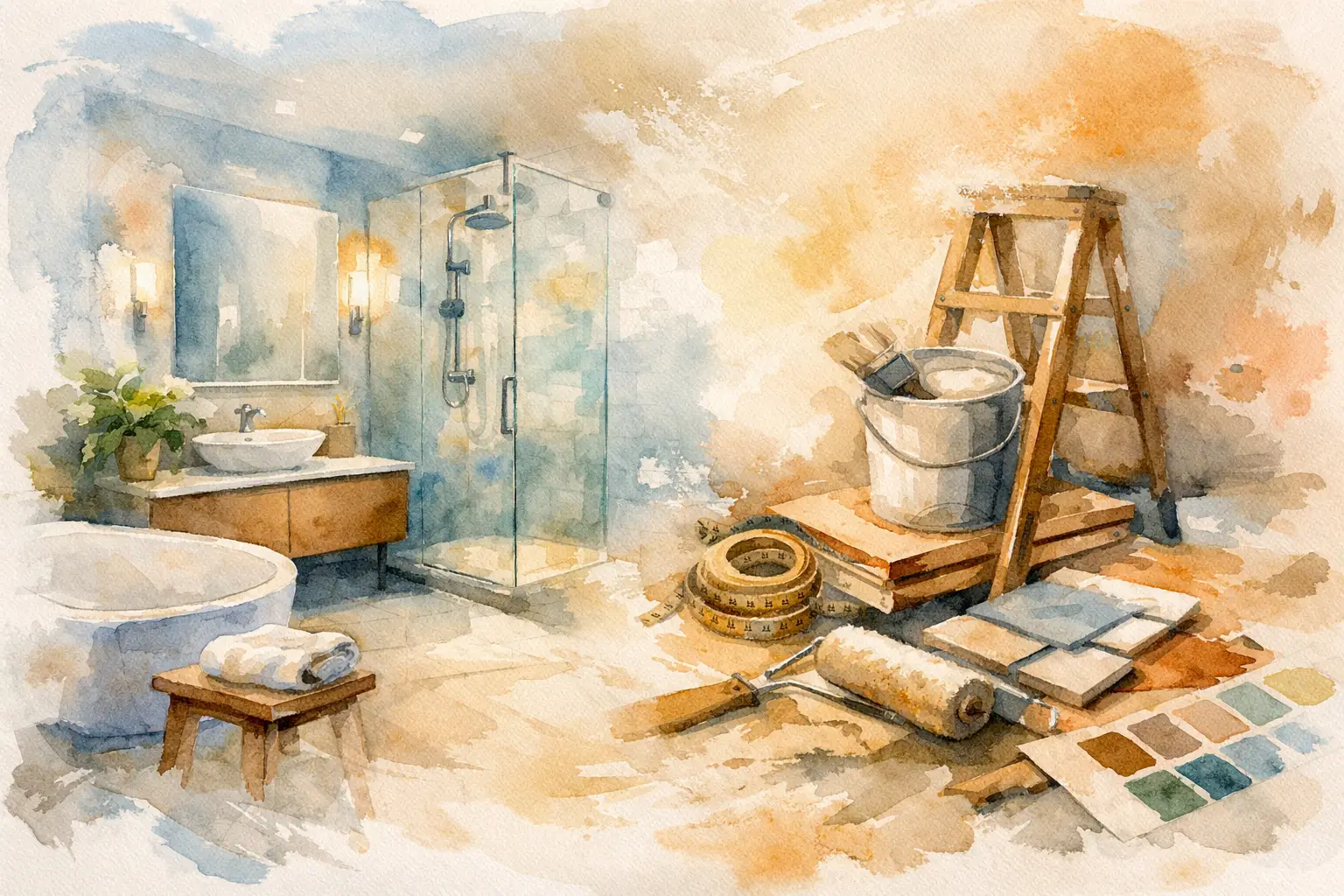
A bathroom can look like a small project from the doorway, but what sits behind the walls often tells a different story. Bathroom renovation budgeting works best when it starts with the way your household uses the room, not with a single number pulled from an online estimate. A family sharing one busy hall bath has different priorities than a homeowner creating a safer, more comfortable primary bathroom for the years ahead.
The goal is not to spend the most. It is to spend intentionally on the improvements that make the room function better every day, while setting aside enough room in the budget for the parts of remodeling that cannot be confirmed until work begins.
The biggest factor in a bathroom budget is scope. Replacing a vanity, flooring, fixtures, and paint while leaving the layout in place is a different project from moving plumbing, opening a wall, adding a walk-in shower, or correcting years of water damage.
Before comparing prices, decide what problem the renovation needs to solve. Is the room short on storage? Does the shower feel cramped? Is the existing tub difficult to step into? Are two people trying to get ready at the same time in a space built for one? Clear answers help keep the project focused and prevent the common mistake of adding features one at a time without understanding their combined cost.
A practical project scope should identify which elements will stay and which will change. That includes the tub or shower, vanity, toilet, flooring, lighting, ventilation, wall finishes, doors, and trim. It should also address the less visible work: plumbing changes, electrical updates, subfloor repair, drywall, waterproofing, and permits when required.
Keeping the existing layout can often control costs because water and drain lines remain in place. That said, preserving an inefficient layout just to avoid plumbing work is not always the right choice. If a better shower location, wider entry, or more useful vanity will improve daily life for years, a layout change may be money well spent.
A well-built bathroom is more than the finishes you can see in a showroom. Labor and preparation often represent a meaningful share of the investment because bathrooms combine several skilled trades in a compact space.
Your budget will generally account for these major areas:
Material choices matter, but they should be evaluated in context. A premium faucet may be a reasonable upgrade if it is used constantly and built to last. Handcrafted tile may be worth the investment in a small accent area but can raise costs quickly when installed across every wall. Custom cabinetry can solve an awkward storage problem, while a well-selected standard vanity may be a better fit for a straightforward guest bathroom.
Installation complexity matters as much as the product price. Large-format tile can create a clean, modern look, but walls and floors must be properly prepared for a precise installation. A curbless shower can be attractive and easier to enter, but it may require floor adjustments and careful drainage planning. Frameless shower glass can complete the space beautifully, yet it needs accurate measurements after tile work is finished.
The most stressful budget surprises usually come from hidden conditions, not from a homeowner choosing a different towel bar. Once demolition begins, a contractor may find water-damaged framing, mold, outdated wiring, corroded plumbing, an uneven floor, or poor previous workmanship.
A contingency is the portion of your budget reserved for those legitimate unknowns. For many bathroom projects, setting aside roughly 10% to 20% is a sensible planning range. The appropriate amount depends on the home’s age, the extent of demolition, and whether plumbing or layout changes are involved. A newer bathroom with a cosmetic scope may need less flexibility than an older Louisville home with original plumbing and several layers of past renovations.
A contingency is not a blank check. It should be handled through clear communication. You should understand what was found, why it needs attention, what the options are, and how the change affects cost and schedule before additional work moves forward whenever conditions allow.
Most homeowners have a wish list, and there is nothing wrong with that. The key is ranking it before construction begins. Start with the improvements tied to safety, water management, function, and durability. Then identify the features that add comfort or style if the budget allows.
For example, proper shower waterproofing, reliable ventilation, adequate lighting, and a vanity that provides usable storage should not be treated as optional extras. Heated flooring, a niche with accent tile, decorative sconces, or a high-end shower system may be excellent additions, but they should be chosen after the essentials are protected.
This approach also gives you options if pricing comes in above your target. You may choose a durable porcelain tile instead of a more costly natural stone, use a standard glass enclosure rather than a custom configuration, or simplify an accent wall. Those are thoughtful trade-offs, not compromises in workmanship.
Avoid cutting the budget by skipping the work that protects the room. Waterproofing, plumbing connections, ventilation, and proper substrate preparation are difficult to see once the room is complete, but they are the foundation of a bathroom that performs well over time.
Two bathroom estimates can have very different totals because they describe different projects. One may include demolition, permit coordination, waterproofing, tile installation, fixture allowances, and final cleanup. Another may appear lower because it leaves out several of those items or assumes the homeowner will manage them separately.
When reviewing an estimate, look for clarity rather than simply searching for the lowest number. A detailed proposal should explain the planned work, the materials or allowances included, and any assumptions that could affect the final price. If a fixture allowance is included, make sure it matches the level of products you actually expect to choose.
Ask how change orders are handled, who coordinates the work, and what communication you can expect during construction. A bathroom renovation disrupts daily routines, especially when it is the only full bath in the home. Knowing the sequence of work and the anticipated timeline helps you plan for temporary arrangements rather than being caught off guard.
Changing your mind after materials are ordered or work is underway can affect more than the cost of one item. It can change installation requirements, lead times, electrical needs, or the measurements for surrounding finishes.
Whenever possible, make the major selections before construction starts. Choose the vanity size, countertop, tile, shower system, lighting, flooring, and hardware early enough to confirm availability. Your contractor can then verify that the choices work together physically and financially.
This does not mean every accessory must be selected on day one. It means the decisions that affect layout, rough plumbing, electrical placement, and lead times need to be settled before they create delays or rework. A good remodeling partner will guide those decisions and point out where one choice influences another.
Resale value can be part of the conversation, but it should not be the only reason for your choices. A bathroom is used every morning and every evening. Better lighting makes getting ready easier. A larger vanity reduces countertop clutter. A shower designed for comfortable entry can support long-term living in your home.
The best bathroom renovation budgeting process considers what will make your routines easier now, while choosing timeless, well-installed features that future buyers can appreciate. In many cases, a functional layout, neutral durable finishes, and quality workmanship offer more lasting value than chasing every current trend.
For homeowners in Louisville and nearby Southern Indiana communities, working with a local, full-service contractor can also reduce the burden of coordinating multiple trades on your own. 3C Remodeling and Construction helps homeowners turn priorities into a defined scope, realistic selections, and a plan built around how the space needs to work.
A budget should give you confidence, not force you to guess. Begin with the problems your bathroom needs to solve, reserve room for the unknown, and choose a team that will explain the decisions clearly. That is how a renovation becomes a practical investment in a room your household will enjoy using every day.
Business Name: 3C Remodeling and Construction
Address: 1902 Campus Pl Suite 12, Louisville, KY 40299
Phone: 502-827-1361
Business Hours:
Mon - Fri: 08:00 AM to 05:00 PM
Sat-Sun: Closed
Referral program available