
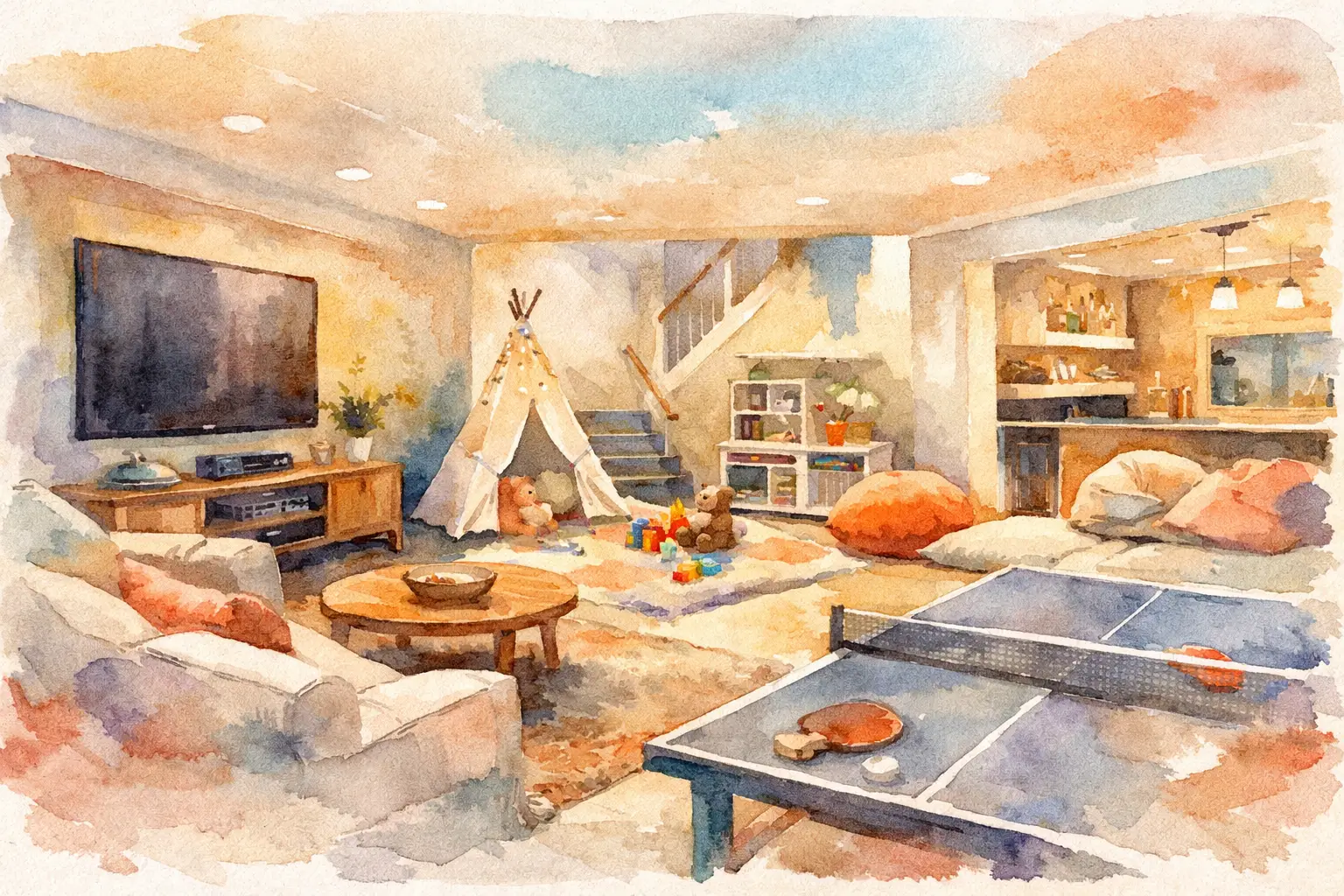
A basement usually starts as the place where extra bins, old toys, and seasonal decorations go to disappear. Then family life changes. Kids need room to play, teens want space to spread out, guests stay over more often, or you simply get tired of wasting square footage. The best basement finishing ideas for families are the ones that make daily life easier, not just the ones that look good in listing photos.
A family-friendly basement should feel connected to the way your household actually lives. That means thinking beyond paint colors and flooring samples. It means asking practical questions first. Will this become a loud play zone, a quiet homework retreat, a movie room, an extra bedroom, or a mix of all three? In many homes, the right answer is not one big open room. It is a flexible layout with enough separation to keep everyone comfortable.
Families usually need a basement to do several jobs at once. That is where good planning matters. A space that looks open and beautiful on day one can become frustrating fast if there is nowhere to store board games, no place for kids to do crafts, and no way for adults to relax while the TV is on.
The most successful basement remodels balance three things: comfort, function, and durability. Comfort means the space feels warm, bright, and welcoming rather than like an afterthought. Function means the layout supports your routines. Durability means finishes can hold up to spills, traffic, toys, pets, and the general wear that comes with family use.
That balance looks different from one home to the next. A family with toddlers may care most about open play space and toy storage. A family with older kids may want a hangout room with charging stations, a snack area, and enough seating for friends. If grandparents visit often, a private guest suite may matter more than a game room. The right design depends on who uses the space now and how that might change over the next several years.
One of the smartest basement finishing ideas for families is to divide the space into clear zones. You do not always need full walls to do that. Changes in furniture layout, lighting, flooring accents, or built-in storage can create separation without making the basement feel chopped up.
A media zone is often the anchor. This is where families gather for movies, sports, or gaming. Comfortable seating, sound control, and a layout that avoids screen glare matter more here than decorative extras. If the basement is large enough, this area can sit apart from a second zone dedicated to kids.
That second zone might be a play area, a craft space, or a homework corner. The goal is simple: give children a place to be active and creative without taking over the whole basement. In practice, that usually means built-in cabinets, low shelving, and surfaces that are easy to wipe down.
If you have the square footage, a third zone for guests or quiet retreat can make the basement far more useful. Even a modest bedroom and bath setup can change how comfortably your home handles visitors, older relatives, or a teen who wants a little more privacy.
Families rarely regret adding more storage. They often regret not planning enough.
A finished basement can quickly collect toys, blankets, games, sports gear, holiday items, and all the overflow that does not fit upstairs. If storage is left as an afterthought, clutter tends to creep back in and the room loses its purpose. That is why built-ins, under-stair storage, wall cabinets, and closed shelving matter so much in family spaces.
Open shelving can work for books, baskets, and decorative items, but too much of it can make a basement feel visually busy. Closed storage usually works better for families because it hides the everyday mess. A good remodel plan often includes a mix of both.
There is also value in separating active-use storage from long-term storage. Toys and board games should be easy to reach. Seasonal bins and keepsakes can be tucked into a utility-adjacent storage room. That kind of planning keeps the finished part of the basement feeling calm and usable.
A basement does not help your family much if nobody wants to spend time there. Comfort is a big part of that.
Lighting is one of the first issues to address. Many basements feel dim because they rely on a few ceiling fixtures and get limited natural light. Layered lighting helps. Recessed lights brighten the main areas, while lamps, sconces, or under-cabinet lighting make the room feel more inviting. Lighter finishes on walls and flooring can also keep the basement from feeling closed in.
Temperature matters too. Basements often run cooler than the rest of the home. Insulation, flooring choices, and HVAC planning all affect whether the space feels cozy or chilly. Carpet can be comfortable in a media area, but many families prefer luxury vinyl plank or other resilient flooring for easier cleanup. A good compromise is durable hard-surface flooring with large area rugs where you want softness.
Noise control is another factor families appreciate. If kids are playing downstairs while someone works upstairs, sound transfer can become an issue. Insulation in the ceiling, thoughtful layout decisions, and solid-core doors in key areas can make a noticeable difference.
It is easy to design around your family’s current season of life. The smarter move is designing for what comes next.
A basement playroom can be wonderful when children are young, but those needs change quickly. That is why flexible design is often the best investment. Instead of highly themed built-ins or overly child-specific finishes, consider choices that can evolve. A craft table can later become a homework station. A toy wall can become media storage. Open floor space that works for play today may become a workout area or teen hangout later.
This is where custom planning really pays off. Families do not stay static, and your basement should not lock you into one use. A remodel that gives you options tends to hold its value better both for daily living and for future resale.
Not every basement feature carries the same value. If you want the remodel to support both current comfort and future appeal, focus on upgrades that broaden how the space can be used.
An extra bathroom is one of the most practical additions. It makes movie nights, sleepovers, guest stays, and daily routines much easier. A small wet bar or snack area can also be useful, especially for households that spend a lot of time downstairs, though it should fit the overall budget and not take away from more important needs like storage or a bathroom.
A guest bedroom or flex room can be a strong investment as well. Even if it is not used weekly, it gives your home more versatility. For some families, that room serves as an office during the day and guest space when needed. For others, it becomes a private area for older kids or visiting relatives.
If your basement has enough room, a separate laundry area can also improve household flow. That depends on your home’s layout, of course. In some homes it makes sense. In others, moving laundry downstairs would only add inconvenience. This is one of those decisions where the right answer truly depends on how your family uses the house.
The biggest basement mistake is trying to fit too much into the space without a clear plan. A large sectional, a game table, a kitchenette, a home gym, and a guest suite can all sound appealing until the room feels cramped and unfocused.
Another common issue is choosing finishes based only on appearance. Families need materials that can handle real life. Flooring should stand up to traffic and spills. Upholstery should be easy to clean. Cabinets should be sturdy enough for regular use. Style matters, but so does how the room performs six months later.
It is also worth being realistic about basement conditions. Moisture, ceiling height, mechanical access, and egress requirements all shape what is possible. A good remodeling plan works with those realities instead of fighting them. That is one reason homeowners in Louisville and surrounding communities often benefit from working with an experienced local remodeling team that understands both design and construction decisions from the start.
The best finished basements do not feel like leftover space. They feel like a natural extension of the home.
That usually comes from a simple shift in thinking. Instead of asking, “What should a basement have?” ask, “What does our family need more of?” More room to gather, more privacy, more storage, more flexibility, or more comfort. When the answers are clear, the design tends to follow.
If you are weighing basement ideas for your home, start with the routines that feel crowded or inconvenient now. The right remodel can ease that pressure and give your family space that works better every day, not just on special occasions.
Business Name: 3C Remodeling and Construction
Address: 1902 Campus Pl Suite 12, Louisville, KY 40299
Phone: 502-827-1361
Business Hours:
Mon - Fri: 08:00 AM to 05:00 PM
Sat-Sun: Closed
Referral program available